
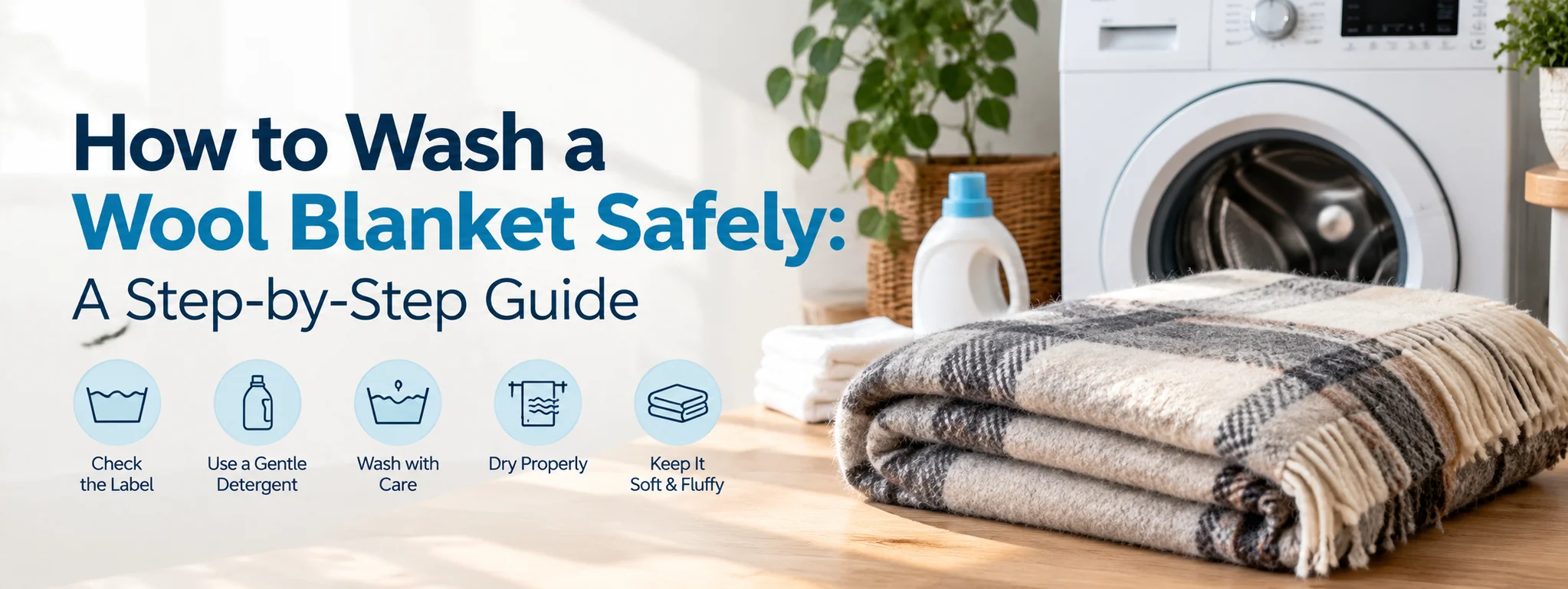
Wool blankets are warm, soft, and naturally comfortable, making them a valuable addition to any bedroom or living room. However, cleaning them requires special care because wool fibers can shrink, lose their shape, or become rough when exposed to excessive heat, harsh detergents, or aggressive washing. Learning how to wash wool blanket properly helps preserve its softness, natural insulation, and beautiful appearance for years.
Whether you own a lightweight merino wool throw, a thick winter blanket, or a traditional wool bedcover, the right cleaning method makes a significant difference. Some wool blankets can be washed gently at home, while others require professional dry cleaning. The safest approach depends on the manufacturer’s care label, the type of wool, and the blanket’s construction.
This step-by-step guide explains how to prepare, wash, dry, and store a wool blanket without causing unnecessary damage. With a few simple precautions, you can keep your favorite blanket fresh, clean, and comfortable throughout every season.
Why Wool Blankets Need Special Care
Wool is a natural fiber with a unique structure. Its tiny scales can interlock when exposed to heat, moisture, and friction, causing the fabric to shrink or become felted. Once severe felting occurs, restoring the blanket to its original size and texture can be difficult.
Unlike ordinary cotton blankets, wool products do not always need frequent washing. Wool naturally resists odors and can often be refreshed through gentle airing between washes.
Proper care offers several important benefits:
- Preserves softness: Gentle cleaning helps prevent rough, scratchy fibers.
- Protects the shape: Careful handling reduces unwanted shrinking and stretching.
- Maintains warmth: Healthy wool fibers retain their natural insulating properties.
- Extends the lifespan: Avoiding harsh cleaning methods helps protect your investment.
- Keeps the blanket fresh: Removing dust, body oils, and occasional stains improves cleanliness.
The goal is not simply to remove dirt but to clean the blanket while preserving the qualities that make wool special.
How to Wash Wool Blanket: Check the Care Label First
Before adding water or detergent, examine the blanket’s care label. Manufacturers use different wool blends, weaving techniques, and finishing treatments, so one cleaning method may not suit every product.
Understand Common Care Instructions
A label marked hand wash generally means the blanket should be cleaned in cool or lukewarm water with minimal agitation. A machine washable label indicates that a suitable washing machine cycle may be used according to the instructions.
If the label says dry clean only, do not assume that hand washing is safe. Some blankets have delicate dyes, special finishes, linings, or construction methods that can be damaged by water.
If the label is missing, contact the manufacturer when possible. For expensive, antique, heavily decorated, or particularly delicate blankets, professional cleaning is often the safest choice.
Gather the Right Supplies
Prepare your cleaning materials before starting. You will generally need:
- A wool-safe, pH-neutral detergent designed for delicate natural fibers.
- A clean basin, bathtub, or suitable washing machine.
- Cool or lukewarm water.
- Clean towels to absorb excess moisture.
- A flat, well-ventilated drying surface.
Avoid chlorine bleach, strong stain removers, and ordinary detergents that may be too harsh for delicate wool.
Step 1: Inspect and Prepare the Blanket
Spread the blanket over a clean surface and examine it carefully. Look for stains, loose threads, damaged seams, and areas that may require extra attention.
Shake the blanket gently outdoors or in a well-ventilated area to remove loose dust, hair, and debris. You can also use a soft clothing brush if the fabric permits.
Treat Small Stains Before Washing
Spot cleaning is often more effective than washing the entire blanket for a small spill.
Blot the affected area with a clean, damp cloth. Work from the outside of the stain toward the center to avoid spreading it. Apply a small amount of wool-safe detergent diluted in water if needed, following the product’s instructions.
Never rub the fabric aggressively or scrub it with a stiff brush. Friction can distort wool fibers and create fuzzy patches.
Test any cleaning solution on a hidden area first, especially if the blanket has bright colors or a delicate finish.
Step 2: Choose Between Hand Washing and Machine Washing
The best method depends on the care label, the blanket’s size, and its overall condition.
| Cleaning method | Best suited for | Important precaution |
|---|---|---|
| Hand washing | Delicate wool blankets labeled for hand washing | Use gentle movements and cool water |
| Machine washing | Wool blankets explicitly labeled machine washable | Select the wool or delicate cycle |
| Professional cleaning | Dry-clean-only, valuable, or fragile blankets | Tell the cleaner about stains and fabric concerns |
| Spot cleaning | Small spills and isolated stains | Avoid soaking or rubbing the surrounding fabric |
If you are uncertain about the blanket’s care requirements, avoid experimenting with an unfamiliar washing method.
Step 3: How to Hand Wash a Wool Blanket Safely
Hand washing provides greater control over water temperature and movement. It is an excellent option for many blankets labeled suitable for hand washing.
Fill a Basin With Cool Water
Choose a clean bathtub or large basin that allows the blanket to move freely. Fill it with cool or slightly lukewarm water, following the manufacturer’s recommended temperature.
Add the appropriate amount of wool-safe detergent and mix it into the water before introducing the blanket. This helps distribute the detergent evenly.
Avoid hot water because excessive heat can contribute to shrinkage and felting.
Submerge the Blanket Gently
Place the blanket into the water and press it down slowly until it becomes wet throughout. Allow it to soak for approximately 10 to 15 minutes if the care instructions and detergent permit.
Gently press the fabric through the water to loosen dirt. Do not twist, wring, stretch, or vigorously agitate it.
If the water becomes dirty, drain it carefully and refill the basin with clean water.
Rinse Thoroughly
Drain the soapy water and refill the basin with cool, clean water. Press the blanket gently to remove detergent.
Repeat the rinsing process until the water is clear and no noticeable detergent remains. Avoid lifting a heavy, waterlogged blanket by one corner because its weight can stretch the fibers.
Instead, support the blanket from underneath as you move it.
Step 4: Machine Wash Only When Permitted
Some modern wool blankets are designed for machine washing. If the care label permits it, use the machine carefully.
Select the Correct Settings
Choose the wool or delicate cycle and use cold water or the temperature specified by the manufacturer. Select a low-spin setting if recommended.
Use a small amount of suitable wool detergent. Excess detergent can leave residue, while harsh products may damage the fibers.
Before starting the cycle, confirm that the blanket fits comfortably inside the machine. An overloaded drum can prevent proper cleaning and increase friction.
Avoid Common Machine-Washing Mistakes
Do not use a normal heavy-duty cycle unless the manufacturer specifically permits it. Avoid high temperatures, vigorous agitation, and unnecessary fabric softeners.
If the blanket is too large for your machine, do not force it inside. A suitable larger-capacity machine or professional cleaner may be a better option.
Even a gentle cycle is not automatically safe for every wool blanket.
Step 5: Remove Excess Water Without Wringing
After washing, the blanket may hold a considerable amount of water. Removing this moisture carefully is essential because wet wool becomes heavier and more vulnerable to stretching.
Never twist the blanket into a tight bundle or squeeze it aggressively.
Instead, support the fabric with both hands and press gently to release water. You can also place the blanket on a clean, absorbent towel, roll the towel and blanket together loosely, and press lightly.
Unroll the towel and transfer the blanket to a dry surface. Repeat with another towel if necessary.
This technique removes excess moisture without placing unnecessary strain on the fibers.
Step 6: Dry the Wool Blanket Correctly
Drying is one of the most important stages of wool blanket care. Even a perfectly washed blanket can become misshapen if it is dried incorrectly.
Lay the Blanket Flat
Place the blanket on a clean, dry towel or a suitable mesh drying rack. Spread it into its original dimensions and smooth out folds without pulling the edges.
Allow air to circulate around the fabric. Turn the blanket occasionally if the drying surface permits it, replacing damp towels as needed.
Keep it away from direct sunlight, radiators, fireplaces, and other strong heat sources. Excessive heat may damage the fibers or affect the color.
Avoid Hanging Heavy, Wet Wool
Hanging a saturated blanket over a clothesline or narrow railing can cause it to stretch under its own weight. This may leave the edges uneven or permanently distort its shape.
Likewise, avoid tumble drying unless the care label explicitly allows it and provides suitable settings.
Drying time varies according to the blanket’s thickness, room temperature, humidity, and airflow. A thick wool blanket may need a day or longer to dry completely.
Before storing it, check that the entire blanket is dry, including thick seams and folded areas.
Step 7: Refresh, Brush, and Store Your Blanket
Once the blanket is completely dry, inspect it for remaining stains, lingering odors, or uneven areas.
If the fabric’s care instructions allow brushing, use a soft clothing brush with light strokes. Avoid aggressive brushing, which may damage the surface or pull out fibers.
For routine freshness, wool blankets can often be aired outside in a shaded, well-ventilated place. This reduces trapped odors without requiring a full wash.
Store It Properly
Fold the blanket loosely and place it in a clean, dry storage area. A breathable cotton storage bag or clean linen cupboard can help protect it from dust.
Avoid sealing a blanket away while it is even slightly damp, as trapped moisture can encourage mildew and unpleasant odors.
For long-term storage, keep the blanket away from direct sunlight and consider appropriate moth protection. Follow product instructions and avoid placing strong chemicals directly against the wool.
Common Mistakes to Avoid When Washing Wool
Even small mistakes can affect the texture, size, and appearance of a wool blanket. Keep these five precautions in mind:
- Using hot water: High temperatures can contribute to shrinkage and felting.
- Rubbing or twisting the fabric: Excessive friction can damage delicate fibers.
- Choosing harsh detergent: Strong cleaning agents may affect wool’s natural texture.
- Drying with excessive heat: Radiators and unsuitable tumble dryers can damage the blanket.
- Storing it before it is dry: Remaining moisture can lead to mildew and musty smells.
Following these precautions helps protect the blanket while making regular cleaning easier and more predictable.
How Often Should You Wash a Wool Blanket?
Wool blankets usually benefit from less frequent washing than many everyday fabrics. The appropriate schedule depends on how often the blanket is used, whether it comes into direct contact with skin, and whether spills or odors develop.
A blanket used occasionally as a decorative throw may need only periodic airing and spot cleaning. A blanket used every night may require more frequent attention, particularly if it becomes visibly dirty.
Rather than washing it according to a rigid schedule, assess its condition and follow the manufacturer’s instructions.
Between washes, remove dust, address spills promptly, and allow the blanket to air out when necessary. This approach reduces unnecessary wear and helps preserve its natural softness.
Frequently Asked Questions
1. Can I wash a wool blanket in a washing machine?
Yes, but only if the care label permits machine washing. Use the recommended wool or delicate cycle, appropriate water temperature, and a wool-safe detergent.
2. Does washing wool in cold water prevent shrinking?
Cold water helps reduce the risk, but it does not guarantee that shrinking will never occur. Friction, agitation, and sudden temperature changes can also contribute to felting.
3. Can I use regular laundry detergent on wool?
A detergent specifically formulated for wool or delicate natural fibers is generally the better choice. Avoid harsh products and follow the manufacturer’s cleaning recommendations.
4. How long does a wool blanket take to dry?
Drying time depends on thickness, humidity, and airflow. A thick blanket may take 24 hours or longer to dry fully when laid flat in a well-ventilated area.
5. What should I do if my wool blanket shrinks?
Avoid applying additional heat or aggressively stretching the blanket. Some minor distortion may be improved through careful professional treatment, but severe felting and shrinkage may be irreversible.
Final Thoughts
Learning how to wash wool blanket correctly can help you protect one of the coziest and most useful items in your home. The secret is to treat wool gently, use an appropriate detergent, control the water temperature, and avoid unnecessary friction.
Always begin by checking the care label, then choose hand washing, machine washing, or professional cleaning according to the manufacturer’s instructions. After washing, remove excess water carefully and dry the blanket flat in a well-ventilated space.
1 thought on “How to Wash Wool Blanket Safely: A Step-by-Step Guide”