
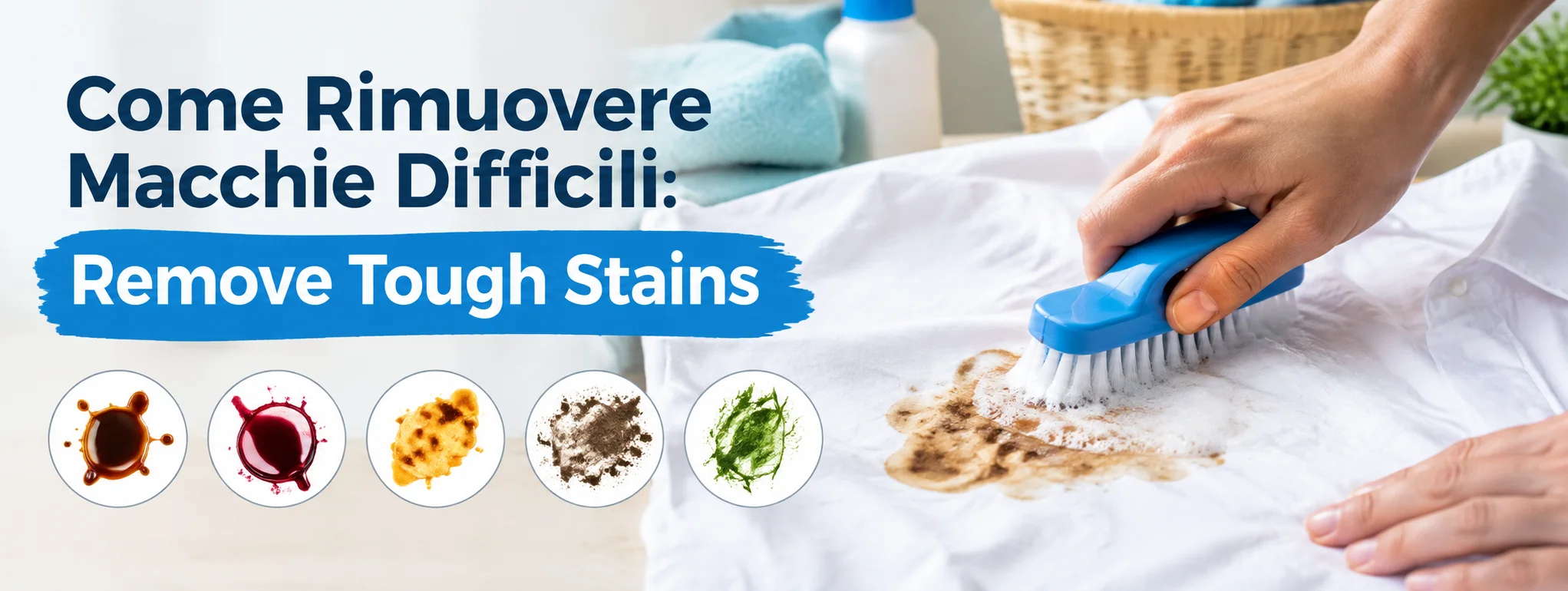
Removing stubborn stains from clothes, carpets, upholstery, and household fabrics can feel frustrating, especially when a favorite item appears permanently damaged. However, learning Come Rimuovere Macchie Difficili can help you restore fabrics, protect their original appearance, and avoid unnecessary replacement costs. With the right cleaning method, suitable products, and a little patience, many difficult stains can be removed safely at home.
The secret is to identify the type of stain before choosing a cleaning solution. Grease, coffee, red wine, blood, ink, and mud each react differently to water, detergents, and stain removers. Using the wrong treatment may spread the stain or make it harder to eliminate.
This practical guide explains effective stain-removal techniques, useful household ingredients, common mistakes to avoid, and simple ways to keep fabrics looking fresh. Whether you are dealing with an unexpected spill or an old mark that refuses to disappear, these proven approaches can help you achieve better cleaning results.
Come Rimuovere Macchie Difficili: The Essential First Steps
Before applying any cleaning product, take a moment to examine the affected material. A careful approach can prevent permanent discoloration, fabric damage, and unnecessary effort.
Act Quickly and Blot the Stain
Fresh stains are usually easier to remove than dried ones. When a spill happens, use a clean, absorbent cloth or paper towel to lift as much of the substance as possible.
Blot gently instead of rubbing. Rubbing can push the stain deeper into the fibers and spread it across a larger area. For thick substances, carefully lift away the excess with a spoon or dull knife.
If the stain is on clothing, check the care label before washing. Delicate fabrics such as silk, wool, and certain synthetic materials may require specialized cleaning.
Identify the Type of Stain
Different stains need different treatments. Water-based stains, such as coffee and juice, often respond to liquid detergent and cool water. Oil-based stains may need a grease-cutting dishwashing liquid. Protein stains, including blood and some food spills, generally require cool water rather than hot water.
Always test a cleaning solution on a hidden area first. This simple precaution helps you determine whether the product affects the fabric’s color or texture.
Effective Methods for Removing Common Tough Stains
Knowing how to treat individual stains makes cleaning more effective. The following techniques use accessible household products and practical cleaning methods.
How to Remove Grease and Oil Stains
Cooking oil, butter, salad dressing, and greasy food can leave dark marks on clothing. These stains are challenging because oil does not mix easily with water.
Start by gently removing excess grease with a spoon or paper towel. Sprinkle a small amount of baking soda or cornstarch over the stain and leave it for approximately 15–30 minutes to absorb some of the oil. Brush away the powder.
Apply a small amount of liquid laundry detergent or grease-cutting dishwashing liquid to the affected area. Gently work it into the fabric and allow it to sit briefly according to the product instructions. Rinse and wash using the recommended fabric-care settings.
Inspect the garment before drying. Heat from a dryer can make remaining grease marks more difficult to remove.
How to Remove Coffee and Tea Stains
Coffee and tea can leave noticeable brown marks on shirts, tablecloths, and upholstery. For washable fabrics, rinse the stain from the reverse side with cool or lukewarm water, provided the care label permits it.
Apply liquid laundry detergent and gently massage it into the affected area. Allow it to work according to the product directions before washing.
For older stains, a fabric-safe oxygen-based stain remover may help. Follow the label instructions and check color compatibility before treatment.
Avoid using very hot water immediately, particularly when the coffee contains milk or cream, because heat can complicate the removal of protein-containing residues.
How to Remove Red Wine and Fruit Juice
Red wine, berry juice, and colorful fruit spills contain pigments that can cling to fabric fibers. Blot the liquid immediately with a clean cloth without rubbing.
Rinse washable material with cool water from the back of the stain. Apply liquid laundry detergent or a suitable stain remover and leave it for the recommended treatment time.
For stubborn marks on colorfast fabrics, an oxygen-based product may offer additional cleaning power. Always follow its instructions and avoid using it on materials for which it is unsuitable.
Never combine several cleaning chemicals in an attempt to create a stronger solution. Use one appropriate treatment at a time, rinsing thoroughly when directed.
How to Remove Blood Stains
Blood stains require particular care because heat can set protein-based residues into fabric.
Rinse fresh blood stains with cold water as soon as possible. Gently blot the area and apply a small amount of liquid laundry detergent suitable for the material.
For persistent marks on compatible fabrics, an enzyme-based laundry product may help break down protein residues. Follow the product label and rinse thoroughly.
Hydrogen peroxide may be appropriate for certain light-colored, colorfast fabrics, but it can bleach or discolor other materials. Test it in an inconspicuous location first and avoid using it on delicate fabrics without professional guidance.
For large, old, or difficult blood stains on valuable items, professional cleaning is often the safest choice.
How to Remove Ink and Marker Stains
Ink stains can be particularly stubborn because some inks contain strong pigments and solvents. First, check whether the stain comes from a ballpoint pen, permanent marker, or water-based marker, since the required treatment can differ.
Place an absorbent cloth beneath washable fabric if appropriate. Blot carefully to prevent the ink from transferring to clean areas.
For some ballpoint ink stains, rubbing alcohol may help dissolve the ink. However, it can damage dyes, finishes, and certain synthetic fibers. Test it on a hidden area and check the garment’s care instructions before proceeding.
Do not pour solvent directly over a large stain. Work carefully with a small amount, replace the absorbent cloth as needed, and rinse or wash according to the product directions.
Permanent marker stains may require specialized stain removers or professional treatment, particularly on upholstery and delicate garments.
Quick Stain-Removal Reference Table
The following table summarizes practical first treatments for common household stains. Always check fabric-care instructions and test products before use.
| Stain Type | Recommended First Treatment | Important Precaution |
|---|---|---|
| Grease and oil | Absorb with cornstarch, then use suitable detergent | Avoid machine drying until the stain disappears |
| Coffee and tea | Rinse and apply liquid laundry detergent | Check for milk or cream in the spill |
| Red wine | Blot, rinse with cool water, and treat with stain remover | Avoid rubbing the pigment deeper |
| Blood | Rinse with cold water and use suitable detergent | Do not begin with hot water |
| Ink | Blot carefully and consider a compatible ink remover | Test solvents for color damage |
| Mud | Allow excess mud to dry, brush it off, and wash | Avoid spreading wet soil |
| Tomato sauce | Remove solids, rinse, and apply detergent | Check for oil and pigment residues |
| Sweat and deodorant | Apply suitable detergent or fabric-safe pretreatment | Avoid harsh chemicals on delicate fabrics |
Natural Cleaning Solutions for Tough Stains
Household ingredients can be useful for certain cleaning tasks, but natural does not automatically mean harmless. The material, stain type, and product concentration all affect the outcome.
Baking Soda for Absorbing Grease and Odors
Baking soda can absorb some surface oil and help reduce unwanted odors. Sprinkle a small quantity over a fresh grease mark, wait briefly, and remove the powder before applying a suitable detergent.
It is also useful for certain household cleaning tasks, but abrasive scrubbing may damage delicate fibers or finishes. Use it gently and avoid assuming it will remove every stain.
White Vinegar for Selected Household Stains
Diluted white vinegar may help with some mineral deposits and certain odors. However, it is not a universal stain remover, and its acidity can damage sensitive materials, natural stone, or some fabric finishes.
Never mix vinegar with chlorine bleach. The combination can release dangerous chlorine gas.
Mild Soap and Water
For many fresh, water-soluble spills, mild soap and water provide a simple starting point. Use a small amount, gently blot the affected area, and remove soap residue with a clean, damp cloth when appropriate.
This method is especially useful when you want to avoid stronger chemicals. Nevertheless, water-sensitive fabrics and materials may require a different approach.
How to Remove Old and Dried Stains
Older stains need patience because residues may have bonded with the fibers or become concentrated as moisture evaporated. The best approach depends on the substance and material.
Soften the Residue Carefully
If the material is washable, check the care label and apply a suitable pretreatment product. Some stains can benefit from a short period of soaking in cool water, but soaking is not suitable for every fabric or stain.
For dried mud, gently brush away loose dirt before introducing water. For dried food, carefully remove solid residue without scraping aggressively.
Repeat Treatment When Necessary
A single wash may not eliminate a stubborn mark. If the fabric remains stained, repeat the recommended pretreatment process rather than immediately using a stronger chemical.
Inspect the item after every treatment. Once the stain is gone, wash and dry it according to the care label.
If the mark remains after several suitable attempts, consider professional cleaning instead of risking permanent damage.
Common Mistakes to Avoid When Removing Stains
Even a good cleaning product can produce poor results when used incorrectly. Avoid these five common mistakes:
- Rubbing aggressively: This may spread the stain and damage fabric fibers.
- Using hot water immediately: Heat can set protein-based stains, including blood.
- Skipping a patch test: Some products can cause fading, discoloration, or surface damage.
- Mixing cleaning chemicals: Combining incompatible products can release toxic gases or cause dangerous reactions.
- Drying stained clothing too soon: Check the stain before using a tumble dryer or applying other heat.
A gentle, methodical approach is often more effective than aggressive scrubbing or repeatedly switching between cleaning products.
Special Care for Carpets and Upholstery
Carpets, sofas, mattresses, and upholstered chairs require a slightly different cleaning strategy because their inner layers may retain moisture.
Blot Instead of Soaking
Remove excess liquid with a clean towel. Apply a suitable upholstery cleaner sparingly, following the manufacturer’s directions. Work from the outside of the stain toward the center to reduce spreading.
Avoid saturating the material. Excess moisture can contribute to odors, prolonged drying, and damage to certain backing materials.
Consider the Material Before Cleaning
Natural fibers, leather, suede, and specialty upholstery may react poorly to water or ordinary household cleaners. Check the manufacturer’s care instructions before treating these surfaces.
For valuable rugs, delicate upholstery, or extensive stains, a qualified cleaning professional can assess the safest method.
Choosing the Right Stain Remover
The best product depends on the stain, the fabric, and the cleaning instructions.
Enzyme-based detergents can be helpful for certain food, sweat, and protein-related residues. Oxygen-based stain removers may help lift some organic stains from compatible washable fabrics. Grease-cutting detergents are often useful for oily marks, while specialized ink removers may work better on particular inks.
Read the product label carefully and observe the recommended dilution, treatment time, ventilation, and protective measures. Keep cleaning products away from children and pets.
Never mix bleach with ammonia, acids, vinegar, or other cleaning products. If a product requires gloves or additional ventilation, follow those directions.
Frequently Asked Questions
1. What is the fastest way to remove a tough stain?
Blot the spill immediately, identify the stain, and apply a suitable treatment. Quick action often improves the chance of successful removal.
2. Can old stains still be removed?
Yes, some old stains can be removed with repeated, fabric-safe pretreatment. However, results depend on the stain, material, and whether heat has set the residue.
3. Does baking soda remove every stain?
No. Baking soda can absorb some grease and odors, but it does not effectively remove every pigment, ink, or protein stain.
4. Should I use hot or cold water?
Cold water is generally the safer starting point for blood and other protein-based stains. Follow fabric-care instructions for other substances.
5. When should I contact a professional cleaner?
Seek professional help for delicate fabrics, valuable upholstery, extensive stains, or marks that persist despite suitable home treatment.
Final Thoughts
Learning Come Rimuovere Macchie Difficili can make everyday cleaning easier, protect your favorite clothes, and help you maintain a cleaner home without unnecessary expense. The most important steps are to act quickly, identify the stain, select a compatible cleaning solution, and avoid treatments that could damage the material.
Whether you are dealing with greasy food, coffee, red wine, blood, or stubborn ink, a careful approach can deliver impressive results. Always test cleaning products first, follow the manufacturer’s instructions, and inspect the material before drying it.
1 thought on “Come Rimuovere Macchie Difficili: Remove Tough Stains”