
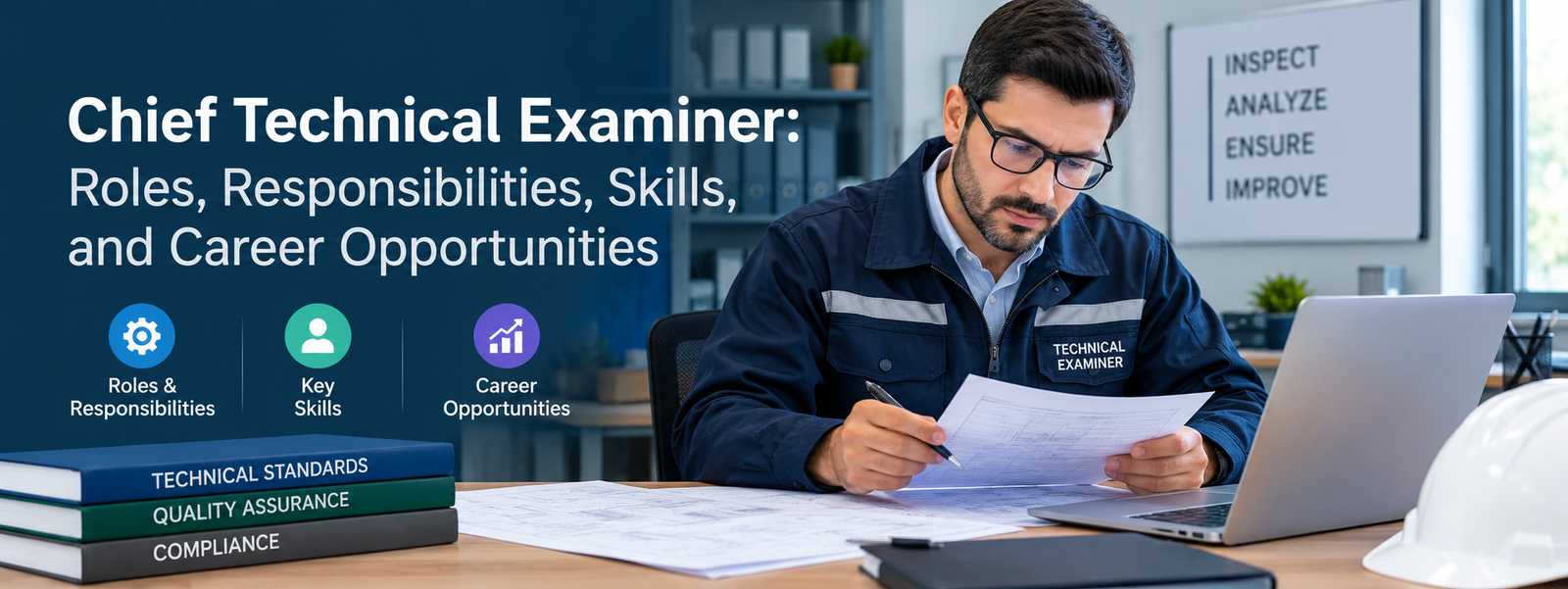
The chief technical examiner plays an important role in maintaining technical standards, improving operational performance, and ensuring that systems, equipment, projects, or professional processes meet established requirements. This position requires strong technical knowledge, excellent analytical skills, and the ability to make accurate decisions under pressure. Whether working in engineering, manufacturing, construction, quality assurance, or another technical field, a chief technical examiner helps organizations identify problems, reduce risks, and achieve reliable results.
As industries continue to adopt advanced technologies and stricter quality standards, the demand for experienced technical professionals remains significant. Understanding the responsibilities, qualifications, essential skills, and career opportunities associated with a chief technical examiner can help aspiring professionals prepare for this demanding and rewarding role.
Understanding the Role of a Chief Technical Examiner
A chief technical examiner is generally a senior technical professional responsible for examining, evaluating, and verifying technical work according to applicable standards, specifications, and organizational procedures. The exact duties depend on the industry, employer, and regulatory environment.
In some organizations, the position focuses on inspecting engineering projects, machinery, equipment, or manufactured products. In others, it may involve reviewing technical documentation, checking compliance, investigating defects, or supervising examination teams.
The word chief indicates a leadership function, while technical examiner describes the professional responsibility of assessing technical accuracy and quality. Together, these responsibilities require a combination of practical expertise, sound judgment, and effective management.
A successful professional in this position does more than identify mistakes. They help determine why problems occur, recommend corrective measures, and establish procedures that prevent similar issues in the future.
Key Responsibilities of a Chief Technical Examiner
The daily responsibilities of a chief technical examiner vary by sector, but several duties are common across many technical environments.
1. Conducting Technical Inspections
Inspection is one of the most important parts of the job. The examiner evaluates equipment, materials, systems, components, or project activities to determine whether they meet the required specifications.
These inspections may involve physical examinations, measurements, functional tests, document reviews, and technical assessments. The examiner must identify defects accurately and distinguish minor issues from problems that could affect safety, performance, or reliability.
2. Ensuring Quality and Compliance
Organizations depend on consistent quality to protect their reputation and maintain customer confidence. A chief technical examiner checks whether technical work follows approved procedures, industry standards, contractual requirements, and applicable regulations.
When an inspection reveals noncompliance, the examiner documents the findings and recommends appropriate corrective action. Depending on the organization, they may also verify that the problem has been resolved before approving the relevant work.
3. Supervising Technical Examination Teams
Senior examiners often coordinate the work of inspectors, engineers, technicians, and other technical employees. They assign responsibilities, establish inspection priorities, review reports, and provide guidance when difficult technical questions arise.
Strong supervision ensures that examinations remain consistent and that team members understand their responsibilities. It also creates opportunities for less experienced employees to develop practical skills.
4. Preparing Technical Reports
Clear documentation is essential in technical examination. A chief technical examiner prepares or reviews reports containing inspection results, identified defects, measurements, compliance findings, and recommendations.
These reports help managers understand technical risks and decide which actions should be taken. Accurate records are particularly important when organizations must demonstrate compliance during audits, investigations, or contractual reviews.
5. Investigating Technical Problems
When machinery fails, products do not meet specifications, or construction work develops defects, the examiner may participate in investigations to identify the underlying cause.
This process involves reviewing evidence, examining relevant records, consulting specialists, and evaluating possible explanations. Rather than focusing only on visible symptoms, the examiner works toward practical solutions that address the source of the problem.
Essential Skills for a Chief Technical Examiner
The position requires a balanced combination of technical expertise, analytical thinking, communication, and leadership. The most important skills depend on the industry, but the following capabilities are valuable in many workplaces.
Technical Knowledge
A chief technical examiner must understand the equipment, systems, materials, or processes they evaluate. Depending on the role, this knowledge may include engineering principles, mechanical systems, electrical installations, manufacturing processes, construction methods, testing procedures, or quality management.
Continuous professional development helps examiners keep pace with changing technologies and standards.
Analytical and Problem-Solving Abilities
Technical problems rarely have a single obvious explanation. Examiners must interpret evidence, compare findings with established criteria, identify inconsistencies, and determine the most reasonable course of action.
Strong analytical thinking helps them make decisions based on facts rather than assumptions.
Leadership and Decision-Making
Because the position may involve supervising teams and reviewing complex findings, leadership is essential. A chief technical examiner should be able to establish priorities, resolve disagreements professionally, and make defensible decisions.
They must also recognize when an issue requires specialist advice or escalation to senior management.
Communication and Report Writing
Technical knowledge has limited value if findings cannot be communicated clearly. Examiners need to explain complex issues to engineers, managers, contractors, clients, and other stakeholders.
Well-organized reports should describe the problem, present supporting evidence, explain the relevant requirements, and recommend suitable corrective measures.
Attention to Detail
Small errors can produce significant consequences in technical environments. Careful observation, accurate measurements, and systematic documentation help prevent overlooked defects and unreliable conclusions.
A disciplined approach also improves consistency across repeated inspections.
Qualifications and Educational Requirements
There is no single educational requirement for every chief technical examiner position. Employers typically determine qualifications according to the nature of the work, the level of responsibility, and applicable professional regulations.
For engineering-related positions, a bachelor’s degree in mechanical, electrical, civil, industrial, or another relevant engineering discipline may be required. Technical diplomas, vocational qualifications, or specialized certifications may be appropriate for certain inspection and testing roles.
Senior positions generally require substantial relevant experience in addition to formal education.
Professional credentials can strengthen an applicant’s profile when they are recognized within the relevant industry. Depending on the role, useful credentials may relate to quality management, nondestructive testing, occupational safety, inspection, auditing, or project management.
Candidates should review individual job advertisements carefully because the required degree, certifications, and experience can differ considerably between employers.
Career Path to Becoming a Chief Technical Examiner
Reaching this senior position usually involves a gradual progression from technical training to practical experience and leadership responsibilities.
Step 1: Choose a Relevant Technical Field
Begin by identifying the industry in which you want to work. Engineering inspection, manufacturing quality control, construction supervision, and industrial maintenance are possible starting points.
Your chosen field will influence the education, practical training, and professional certifications you need.
Step 2: Build Practical Experience
Entry-level roles such as technician, quality inspector, engineering assistant, or technical officer can provide valuable exposure to workplace procedures.
During this stage, learn how to conduct inspections, interpret technical drawings, use measurement tools, maintain records, and follow safety requirements.
Step 3: Develop Specialized Expertise
As you gain experience, focus on the standards, testing methods, and technical procedures relevant to your industry. Seek opportunities to investigate defects, participate in audits, and contribute to process improvements.
Specialized knowledge helps you handle complex assignments with greater confidence.
Step 4: Develop Supervisory Skills
Senior examination positions often require experience managing people and projects. Practice assigning tasks, reviewing technical work, mentoring colleagues, and communicating findings to decision-makers.
Leadership ability can become a major factor in promotion.
Step 5: Apply for Senior Examination Positions
Once you meet the relevant experience and qualification requirements, begin applying for senior inspector, examination supervisor, technical audit manager, or chief technical examiner vacancies.
Tailor your résumé to demonstrate measurable achievements, relevant certifications, inspection experience, and examples of problems you successfully resolved.
Industries That May Employ a Chief Technical Examiner
The title can be used differently across organizations, so applicants should evaluate the actual responsibilities rather than relying on the job title alone.
| Industry | Typical examination responsibilities | Relevant expertise |
|---|---|---|
| Engineering | Reviewing designs, installations, and technical systems | Engineering principles and testing |
| Manufacturing | Checking products, components, and production quality | Quality control and defect analysis |
| Construction | Evaluating materials, workmanship, and project compliance | Construction standards and inspection |
| Energy and utilities | Examining equipment and operational systems | Electrical, mechanical, or energy systems |
| Transportation | Assessing components, maintenance, and technical safety | Mechanical systems and safety procedures |
| Industrial maintenance | Investigating equipment condition and failures | Diagnostics and preventive maintenance |
| Public-sector technical services | Reviewing technical work against official requirements | Regulatory procedures and documentation |
The table provides general examples rather than a universal job description. Some organizations use different titles for comparable responsibilities, while others assign the chief technical examiner a specialized legal, financial, engineering, or administrative function.
Tools and Technology Used in Technical Examination
Modern technical examination increasingly combines traditional inspection methods with digital technologies. The tools required depend on the workplace and the risks being assessed.
Common examples include:
- Measurement instruments: Calipers, micrometers, gauges, and other devices help verify dimensions and tolerances.
- Testing equipment: Specialized instruments evaluate the performance, condition, or integrity of materials and systems.
- Computer-aided design software: Technical drawings and digital models help examiners compare completed work with approved designs.
- Inspection management systems: Digital platforms organize inspection schedules, findings, corrective actions, and reports.
- Data analysis tools: Spreadsheets and reporting software help identify recurring defects, monitor trends, and evaluate performance.
Some industries also use thermal imaging, remote inspection equipment, automated testing, or nondestructive testing technologies. Appropriate training is essential before using specialized equipment or interpreting its results.
Challenges Faced by a Chief Technical Examiner
The position can be demanding because examination findings may influence safety, costs, project schedules, and organizational decisions.
One challenge is balancing thoroughness with efficiency. Examiners must investigate important details without creating unnecessary delays. Another is handling disagreements when inspection results conflict with a contractor’s expectations or a manager’s preferred timeline.
Keeping up with updated standards and new technologies can also require continuous learning. In addition, incomplete documentation, limited resources, and difficult working conditions may complicate the examination process.
Professional integrity is particularly important. A chief technical examiner should report findings honestly, maintain appropriate records, and avoid allowing commercial pressure to influence technical conclusions.
Salary Expectations and Career Growth
The salary of a chief technical examiner depends on several factors, including location, industry, qualifications, years of experience, employer type, and the scope of responsibility.
Senior professionals working in specialized industries may receive higher compensation than those in entry-level or less technically demanding positions. Additional responsibilities, such as supervising large teams, approving critical work, or managing complex inspections, may also affect compensation.
Because the title is not standardized across all sectors, a single salary figure would not accurately represent every position. Applicants should compare current vacancies in their country and industry, paying attention to required qualifications, benefits, working conditions, and promotion opportunities.
Potential career progression may include technical inspection manager, quality assurance manager, engineering compliance manager, technical operations director, or another senior leadership role. The most suitable path depends on the professional’s experience and specialization.
How to Prepare for a Chief Technical Examiner Interview
Candidates preparing for an interview should be ready to explain both their technical knowledge and their approach to professional responsibility.
Employers may ask how they would identify a serious defect, handle an inspection disagreement, document a compliance failure, or prioritize several urgent assignments.
Prepare specific examples that demonstrate your ability to solve problems, work with technical teams, and communicate difficult findings. Where possible, describe the situation, the action you took, and the result.
Review the employer’s industry, relevant technical standards, and advertised responsibilities before the interview. Be prepared to discuss safety, quality assurance, risk assessment, and corrective action.
Most importantly, explain how you make evidence-based decisions and maintain professional independence when under pressure.
Final Thoughts
The chief technical examiner is an important professional role in organizations that depend on technical accuracy, reliable performance, and consistent quality standards. Although responsibilities vary between industries, the position generally requires strong technical knowledge, careful examination, clear reporting, and sound decision-making.
Building a career in this field takes more than academic qualifications. Practical experience, specialized training, leadership ability, and a commitment to professional integrity are equally valuable.
For aspiring candidates, the most effective strategy is to choose a relevant technical field, develop hands-on expertise, understand applicable standards, and gradually take on more complex responsibilities. With the right preparation and continued learning, a career as a chief technical examiner can offer meaningful opportunities to improve quality, prevent failures, and contribute to organizational success.
Frequently Asked Questions
1. What does a chief technical examiner do?
A chief technical examiner generally oversees technical inspections, evaluates compliance, reviews findings, investigates defects, and helps ensure that work meets established requirements.
2. What qualifications are required for a chief technical examiner?
Requirements vary by employer and industry. Relevant engineering or technical education, practical experience, and appropriate professional certifications may be required.
3. Is experience important for this position?
Yes. Senior examination roles commonly require practical experience, sound technical judgment, and the ability to handle complex inspections or supervise other professionals.
4. Where can a chief technical examiner work?
Possible workplaces include engineering companies, manufacturing facilities, construction firms, energy organizations, transportation services, and public-sector technical departments.
5. How can someone become a chief technical examiner?
Start with relevant technical education, gain experience in inspection or quality control, develop specialized knowledge, strengthen leadership skills, and apply for senior roles that match your qualifications.
1 thought on “Chief Technical Examiner: Roles, Responsibilities, Skills, and Career Opportunities”