
Introduction
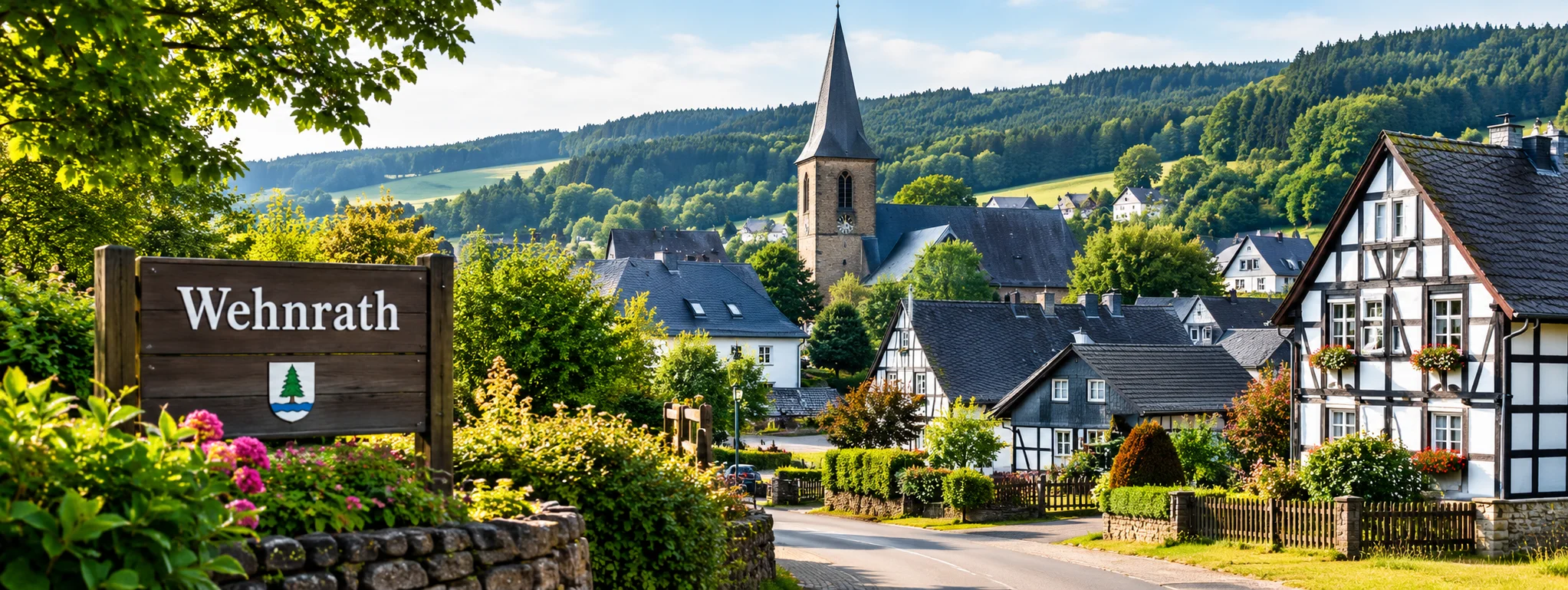
Wehnrath is a small German locality in the municipality of Reichshof, located in the Oberbergischer Kreis district of North Rhine-Westphalia. Surrounded by the rural landscapes of western Germany, this settlement offers an interesting combination of historical roots, local community life, and modern commercial activity. Although it is not a major tourist destination, Wehnrath is worth exploring for anyone interested in German villages, regional history, and the development of smaller communities.
People searching for Wehnrath may encounter different spellings, historical references, and information about nearby businesses. Understanding its location and administrative background makes it easier to distinguish this village from similarly named places.
The locality is particularly interesting because its history stretches back several centuries, while its surrounding area remains connected to the wider economy of Reichshof. From its position in the scenic Oberbergisches Land to its proximity to the Wiehltalsperre reservoir, Wehnrath provides a useful glimpse into everyday life beyond Germany’s largest cities.
Where Is Wehnrath Located?
Wehnrath is situated in western Germany, within the state of North Rhine-Westphalia. Administratively, it belongs to the municipality of Reichshof in the Oberbergischer Kreis district, which falls under the Cologne administrative region.
The settlement lies northeast of the Wiehltalsperre reservoir. The surrounding region is known for its wooded hills, green meadows, small settlements, and rural character. Unlike heavily populated urban areas, this part of North Rhine-Westphalia offers a more relaxed landscape with a mixture of residential communities, open countryside, and commercial locations.
Gummersbach is one of the nearest larger towns, while Cologne and Siegen are farther away. These connections help place Wehnrath within the wider geography of western Germany.
Wehnrath’s Location at a Glance
The following table summarizes essential geographical and administrative information.
| Detail | Information |
|---|---|
| Official place name | Wehnrath |
| Country | Germany |
| Federal state | North Rhine-Westphalia |
| District | Oberbergischer Kreis |
| Municipality | Reichshof |
| Administrative region | Cologne |
| Postal code | 51580 |
| Telephone area code | 02265 |
| Nearby natural landmark | Wiehltalsperre reservoir |
| Historical first mention | 1357 |
| General character | Rural locality with an associated commercial area |
These details provide a useful starting point for travelers, researchers, and readers looking to identify Wehnrath accurately.
The History of Wehnrath
Wehnrath has historical roots that reach back to the Middle Ages. Its earliest commonly cited documentary mention dates to 1357, when the settlement’s name appeared in a historical record in the form Wenegenroede.
This early reference connects the locality to the political and social circumstances of medieval western Germany. During that period, settlements across the region developed within a complex landscape of religious authorities, local landholders, agricultural communities, and changing territorial relationships.
However, a first documentary mention does not necessarily indicate the exact year a village was founded. Communities frequently existed before their names appeared in surviving written records. Therefore, 1357 should be understood as the earliest commonly cited written reference, rather than a confirmed founding date.
How the Name Wehnrath Has Changed
Historical place names often change as languages evolve and administrative records are updated. Wehnrath’s earlier recorded form, Wenegenroede, illustrates how considerably a locality’s name can differ from its modern spelling.
Older documents may use forms that reflect the spelling conventions, pronunciation, or recording practices of their time. This makes historical research valuable but sometimes challenging.
For anyone researching Wehnrath, comparing historical records with modern municipal information is a practical way to avoid confusing different places or treating an old spelling as an entirely separate settlement.
Life in Earlier Times
Like many small settlements in the Oberbergisches Land, Wehnrath developed within a predominantly rural regional setting. Agriculture, local trade, family networks, and connections with neighboring communities traditionally played important roles in village life across this wider area.
Nevertheless, detailed claims about individual historical occupations, buildings, or notable residents should be supported by local archival evidence. The available historical reference establishes the locality’s early documentary presence, but it does not independently confirm every aspect of its medieval daily life.
Natural Surroundings and Rural Character
One of Wehnrath’s defining features is its position within the Oberbergisches Land, a region of North Rhine-Westphalia associated with rolling hills, forests, meadows, and scattered settlements.
The landscape creates a different experience from Germany’s larger metropolitan destinations. Instead of extensive urban skylines and crowded commercial streets, visitors encounter a region where smaller communities sit within a broader countryside setting.
The Importance of the Wiehltalsperre
The Wiehltalsperre reservoir is a notable geographical feature near Wehnrath. Its presence adds to the area’s regional interest, particularly for people exploring the surrounding countryside.
Reservoirs can serve several practical purposes, including water management and supply. Their surroundings may also attract visitors interested in landscapes and outdoor recreation, subject to local access rules and restrictions.
Anyone planning a visit should check current information about access, parking, walking routes, and any protected areas before setting out. A nearby landmark does not automatically mean that every shoreline or service is publicly accessible.
Exploring the Wider Countryside
Wehnrath can serve as a geographical reference point for discovering the surrounding Reichshof area. The wider municipality includes numerous localities, meaning visitors can explore a broader collection of rural settlements rather than focusing exclusively on one village.
Walking, cycling, and countryside sightseeing are activities associated with the wider region. Actual route suitability depends on weather, terrain, traffic, and whether a particular path is designated for public use.
For travelers who appreciate quieter destinations, the area offers an opportunity to discover a less familiar part of North Rhine-Westphalia.
<WritingBlock id=”58315″ variant=”document”>## Wehnrath and the Modern Local Economy
Although Wehnrath is a relatively small locality, its modern identity is not limited to residential life and countryside scenery. The area also has an established commercial zone that contributes to the wider economy of Reichshof.
The municipality’s official information identifies Wehnrath as a location for businesses and industrial activity. Its commercial area contains companies operating in different sectors, demonstrating how rural communities can maintain economic connections beyond agriculture and traditional local services.
Businesses and Industrial Development
One recognizable business associated with the area is Ralf Bohle GmbH, the company behind the Schwalbe bicycle tire brand. The company connection gives Wehnrath visibility beyond the immediate region, particularly among people interested in cycling and bicycle manufacturing.
The commercial zone also reflects the importance of infrastructure in regional development. Access to larger roads can help businesses move products, receive materials, and connect with customers across Germany.
This combination of rural surroundings and commercial activity makes Wehnrath more than a simple residential settlement. It demonstrates how smaller German localities can accommodate established businesses while remaining part of a predominantly rural municipality.
How Transport Supports the Local Economy
The wider Reichshof area benefits from access to the A4 motorway and the B256 federal road. According to municipal information, the Reichshof-Denklingen motorway junction is approximately three kilometres from the Wehnrath commercial area.
Such connections can be important for logistics, employment, commuting, and regional trade. They also help explain why companies may choose locations outside large city centers while maintaining links to wider markets.
Travelers should distinguish distances reported for the commercial area from distances to individual homes or other points within the locality. Exact journeys depend on the destination and chosen route.
Population and Community Life
Wehnrath is a small settlement rather than an independent city. Its community forms part of Reichshof, a municipality containing numerous villages and localities across the Oberbergisches Land.
A commonly cited historical population series recorded 292 residents in Wehnrath at the end of 2019. This figure provides historical context, but it should not be presented as the current population without a newer, appropriately dated official record.
What a Small Population Means for Village Life
Smaller communities often have a different rhythm from large cities. Residential areas, neighboring villages, local roads, and nearby commercial facilities can all influence everyday routines.
Residents may rely on the wider municipality for services such as education, administration, shopping, and recreation. The exact facilities available within walking distance depend on the specific part of Wehnrath and the services operating at a given time.
Reichshof’s broader community infrastructure includes educational and childcare facilities, as well as opportunities for sports and recreation. These municipal services help support the wider population across its different settlements.
Understanding Population Changes
Population statistics can help explain how localities develop, but numbers require careful interpretation. A change in recorded population might reflect household changes, migration, demographic trends, or differences in the way a locality is counted.
For Wehnrath, the most useful approach is to compare figures from the same official statistical source across clearly identified years. This avoids presenting an outdated estimate as a current fact or drawing unsupported conclusions about population growth.
Things to Explore Near Wehnrath
Wehnrath is best approached as part of a broader visit to Reichshof and the surrounding countryside. Rather than expecting a large collection of major attractions inside the locality itself, visitors can explore the area’s landscape and nearby destinations.
1. The Wiehltalsperre Reservoir
The Wiehltalsperre is a useful starting point for understanding the local geography. Its proximity to Wehnrath makes it a notable landmark for visitors interested in the region’s water landscapes and natural surroundings.
Before visiting, check local guidance regarding permitted activities and access conditions.
2. Eckenhagen and Nearby Settlements
Eckenhagen is another locality within the wider Reichshof area. Exploring neighboring settlements can help visitors understand the municipality’s dispersed structure and discover additional local facilities.
Check individual destinations for current opening hours and visitor information rather than assuming that every attraction is open throughout the year.
3. Walking and Cycling in the Region
The wooded hills and rural roads of the Oberbergisches Land provide a setting for outdoor activities. Walking and cycling can be rewarding ways to experience the countryside at a slower pace.
Choose established routes appropriate to your fitness level, and check elevation changes, road conditions, and access restrictions in advance.
4. Regional Culture and Architecture
The wider region contains traditional villages and historic sites that reflect the development of rural North Rhine-Westphalia. Visitors interested in local history can investigate nearby churches, historic buildings, and regional museums.
Individual attractions should be checked before travel, as their locations, opening hours, and accessibility vary.
5. Exploring Reichshof as a Whole
Reichshof comprises many individual localities, so a visit focused only on Wehnrath may overlook much of the surrounding region. Exploring several nearby places can provide a more complete picture of the municipality’s landscape, community life, and economic development.
Practical Travel Information for Wehnrath
Planning a visit is easier when you confirm the destination and transport arrangements before leaving.
- Location: Search for Wehnrath, Reichshof, North Rhine-Westphalia, Germany.
- Postal code: Use 51580 when checking addresses and navigation results.
- Getting around: Check driving directions and public transport connections for your specific destination.
- Outdoor activities: Review route conditions, weather forecasts, and local access rules.
- Accommodation: Search the wider Reichshof area if you need more lodging options than the immediate locality provides.
Because Wehnrath is a small locality, some facilities may be located in neighboring settlements rather than within the village itself. Confirming distances and opening hours in advance can prevent unnecessary detours.
Why Wehnrath Is Worth Understanding
Wehnrath illustrates an aspect of Germany that can be overlooked when travel information focuses mainly on famous cities. Small localities contribute to the country’s regional identity through their histories, communities, landscapes, and economic connections.
Its medieval documentary history provides a link to the past, while its commercial area demonstrates how modern business activity can operate in a rural setting. The nearby reservoir and surrounding countryside add geographical interest without requiring the locality to be a major tourist destination.
For researchers, Wehnrath also offers a useful example of why place names and administrative boundaries matter. A settlement may have historical spellings, business associations, and nearby landmarks that appear in different records. Combining those details creates a more accurate picture than relying on a single description.
Final Thoughts
Wehnrath is a small but distinctive locality in Reichshof, North Rhine-Westphalia, Germany. Its earliest commonly cited documentary reference dates to 1357, giving the settlement a historical connection to the medieval period. Today, it is associated with the rural landscape of the Oberbergisches Land, the nearby Wiehltalsperre reservoir, and a commercial area that supports regional economic activity.
For travelers, Wehnrath provides a starting point for exploring the wider Reichshof countryside. For history enthusiasts, it offers an example of how local place names preserve traces of earlier centuries. For readers researching German geography, its administrative location and historical spelling are important details to understand.
Ultimately, Wehnrath’s appeal lies in the relationship between its past and present. It is not a major city or a destination defined by a long list of famous attractions, but it offers a meaningful glimpse into the everyday geography, heritage, and economic life of rural Germany.
Frequently Asked Questions
1. Where is Wehnrath located?
Wehnrath is a locality in Reichshof, within the Oberbergischer Kreis district of North Rhine-Westphalia, Germany.
2. How old is Wehnrath?
Its earliest commonly cited documentary mention dates to 1357. This is the earliest known reference cited in local historical summaries, not necessarily the settlement’s founding year.
3. What is the postal code for Wehnrath?
The postal code associated with Wehnrath is 51580.
4. How many people live in Wehnrath?
A historical population series recorded 292 residents in 2019. A current population figure should be confirmed using recent official statistics.
5. What is Wehnrath known for?
Wehnrath is known as a small locality in Reichshof, its rural surroundings, its historical background, and its commercial area, which includes a connection to the Schwalbe bicycle tire brand.
1 thought on “Wehnrath: German Village in Reichshof, North Rhine-Westphalia”