
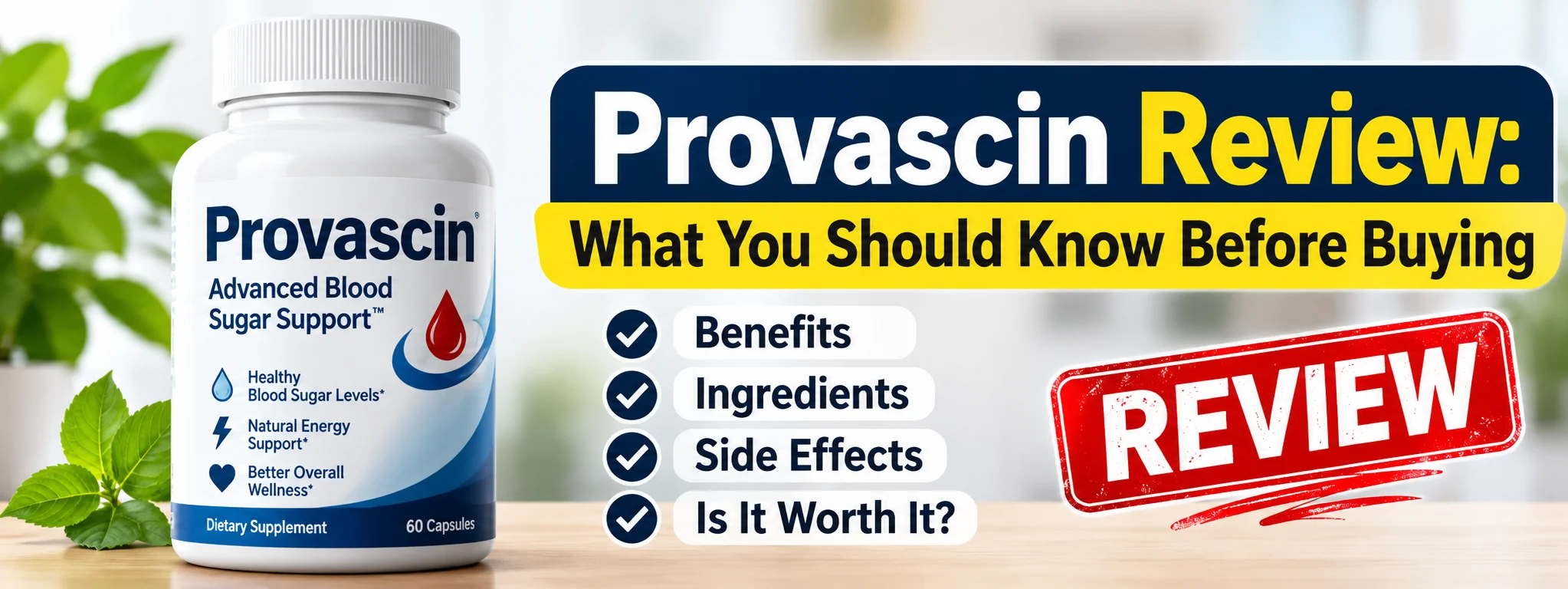
When researching supplements for cardiovascular wellness, circulation, and overall health, it is important to look beyond advertising claims and understand what a product actually contains. This Provascin Review examines the supplement’s reported ingredients, potential benefits, scientific evidence, possible side effects, and important purchasing considerations. Rather than relying on promotional statements, this guide separates historical product information from claims that have not been clinically established.
Provascin is historically associated with PURICA, a Canadian natural health supplement brand. Its reported formula combines nutrients, amino-acid derivatives, and plant-based extracts, including L-carnitine, Coenzyme Q10, Chaga mushroom, and grape seed extract. These ingredients have been researched individually for different biological functions, but that does not automatically mean the complete supplement delivers the same benefits.
Provascin Review: Understanding the Supplement
Provascin is best documented as a multi-ingredient dietary supplement historically marketed by PURICA for cardiovascular and metabolic wellness. It was designed around a combination of nutrients and botanical ingredients associated with cellular energy production and antioxidant activity.
The supplement was generally promoted for supporting:
-
General cardiovascular wellness.
-
Normal cellular energy production.
-
Antioxidant activity.
-
Healthy circulation.
-
Normal metabolic functions.
However, these are historical product-positioning claims, not proof of medical effectiveness. There is insufficient direct clinical evidence establishing that the complete Provascin formula prevents heart disease, treats hypertension, or reliably lowers cholesterol.
An important distinction is that Provascin is not a prescription cardiovascular medicine. It should not replace prescribed medication, professional diagnosis, or recommended treatment.
Provascin Ingredients and Their Reported Functions
One of the most important parts of this Provascin Review is understanding the original ingredient combination. Historical retailer listings describe eight active ingredients per capsule. The quantities below should be treated as historical label information, not confirmation of the contents of every product currently sold under this name.
| Ingredient | Historical amount per capsule | Main area of research |
|---|---|---|
| L-Carnitine | 188 mg | Cellular energy metabolism |
| Alpha-ketoglutaric acid | 125 mg | Cellular metabolism |
| Organic Chaga mushroom | 125 mg | Antioxidant activity |
| Coenzyme Q10 | 38 mg | Cellular energy production |
| Betaine hydrochloride | 31 mg | Digestive and metabolic functions |
| DL-alpha-lipoic acid | 13 mg | Antioxidant activity |
| Grape seed extract | 9 mg | Plant polyphenols and antioxidant research |
| Green tea extract | 9 mg | Antioxidant and metabolic research |
These quantities are based on historical product descriptions associated with PURICA. They should be checked against an actual package before relying on them.
1. L-Carnitine
L-carnitine is a naturally occurring compound that helps transport fatty acids into mitochondria, where cells use them to produce energy. It is found in foods such as meat and fish and can also be obtained through supplementation.
Researchers have investigated carnitine for metabolic health, exercise performance, and cardiovascular conditions. However, the findings depend on the population, dosage, and health condition being studied.
The presence of L-carnitine in Provascin does not establish that the supplement improves heart function or prevents cardiovascular disease.
2. Coenzyme Q10
Coenzyme Q10, commonly called CoQ10, is a compound naturally produced by the body. It plays an important role in cellular energy production and also functions as an antioxidant.
Because the heart requires a continuous supply of energy, CoQ10 has attracted considerable research interest in cardiovascular health.
However, evidence remains limited for several proposed cardiovascular uses. The National Center for Complementary and Integrative Health reports that available evidence suggests CoQ10 probably does not have a meaningful effect on blood pressure.
3. Chaga Mushroom
Chaga is a type of mushroom that grows primarily on trees, particularly birch trees. It contains naturally occurring compounds that researchers have investigated for their antioxidant properties.
Some laboratory research has explored its potential biological effects, but laboratory findings should not be confused with proven health benefits in humans.
There is insufficient clinical evidence to establish that the amount historically included in Provascin provides meaningful cardiovascular protection.
4. Alpha-Ketoglutaric Acid
Alpha-ketoglutaric acid is involved in the citric acid cycle, an important process through which cells generate energy.
It also participates in amino acid metabolism and other biochemical processes.
Its inclusion in a nutritional formula reflects interest in cellular metabolism. However, there is not enough product-specific research to establish that this ingredient improves cardiovascular outcomes when consumed as part of Provascin.
5. Betaine Hydrochloride
Betaine hydrochloride is a compound used in some digestive supplement formulations. It is different from betaine anhydrous, which is researched for other metabolic functions.
The historical Provascin formula included a relatively small quantity of betaine hydrochloride.
Consumers should not assume that research on other forms of betaine automatically applies to this ingredient or demonstrates a benefit from the complete supplement.
6. Alpha-Lipoic Acid
Alpha-lipoic acid is a naturally occurring compound involved in mitochondrial energy metabolism. It has also been investigated for its antioxidant properties and possible effects on glucose metabolism.
Some studies have explored its use in people with metabolic conditions, but findings vary.
Its presence in Provascin does not establish that the finished product controls blood sugar or treats diabetes.
7. Grape Seed Extract
Grape seed extract contains plant compounds known as polyphenols, including proanthocyanidins.
These substances have attracted scientific interest because of their antioxidant properties. Researchers have investigated their possible relationship with blood vessel function and other aspects of cardiovascular wellness.
Nevertheless, more research is needed to determine whether the small historical quantity in Provascin produces meaningful health outcomes.
8. Green Tea Extract
Green tea extract contains catechins and other plant compounds that have been investigated for their potential metabolic and antioxidant effects.
Research reviewed by NCCIH suggests that green tea products may produce small reductions in total and LDL cholesterol in some circumstances. However, this evidence does not demonstrate that Provascin itself lowers cholesterol.
Green tea extract supplements can also cause digestive discomfort, and rare cases of liver injury have been reported.
Potential Benefits of Provascin: What Does the Evidence Suggest?
The historical marketing of Provascin focused on cardiovascular and metabolic support. Its ingredients have different biological functions, but the strength of the available research varies.
Here are the main areas associated with the formula.
Cardiovascular Wellness
Several ingredients in the historical formula have been studied in connection with cardiovascular health.
CoQ10, L-carnitine, and grape seed extract are particularly relevant to this research area. However, studying individual ingredients does not prove that their combination prevents cardiovascular disease.
People with heart conditions should rely on evidence-based medical care rather than using an unverified supplement as their primary treatment.
Antioxidant Support
CoQ10, Chaga, alpha-lipoic acid, grape seed extract, and green tea extract are associated with antioxidant research.
Antioxidants help protect cells against oxidative damage under certain biological conditions. Nevertheless, antioxidant activity in laboratory studies does not necessarily translate into noticeable improvements in human health.
Cellular Energy Production
L-carnitine and CoQ10 participate in different processes involved in cellular energy production.
This makes them interesting ingredients for nutritional research. However, there is no reliable evidence establishing that Provascin produces a noticeable increase in everyday energy or physical endurance.
Metabolic Health
Alpha-lipoic acid, L-carnitine, and other components have been studied in relation to glucose metabolism and other metabolic processes.
The results from these studies cannot be used to promise blood sugar control from Provascin. Anyone managing diabetes should continue following their healthcare professional’s recommendations.
Does Provascin Actually Work?
This is one of the most important questions in any Provascin Review.
The honest answer is that the available evidence does not establish the complete supplement as an effective treatment for cardiovascular disease, high blood pressure, or high cholesterol.
There is a difference between three types of evidence:
-
Ingredient research: Studies investigate individual ingredients such as CoQ10 or L-carnitine.
-
Formula research: Clinical trials test the exact combination and quantities used in the finished supplement.
-
Real-world outcomes: Researchers examine whether people experience meaningful improvements when using the product.
Most of the information available about Provascin focuses on its historical ingredient list and the research surrounding individual compounds.
Without reliable clinical trials testing the complete formula, strong claims about its effectiveness would be misleading.
For consumers, this distinction is particularly important when an online review promises dramatic improvements in blood pressure, cholesterol, or circulation without identifying a published study.
Provascin Side Effects and Safety Considerations
Although natural ingredients may sound reassuring, natural supplements are not automatically safe for everyone. Individual ingredients can have biological effects, and combining them may create additional considerations.
Possible concerns associated with the historical ingredients include:
-
Digestive discomfort: Some ingredients, including carnitine and green tea extract, may cause nausea or stomach discomfort.
-
Medication interactions: CoQ10 and other supplement ingredients may interact with certain prescription medicines.
-
Blood sugar considerations: Ingredients investigated for metabolic effects may be relevant to people taking diabetes medication.
-
Liver-related concerns: Green tea extract supplements have been associated with rare cases of liver injury.
-
Allergic reactions: People sensitive to mushrooms, botanical extracts, or other ingredients should check the complete label.
The NIH Office of Dietary Supplements also identifies potential gastrointestinal effects and other concerns associated with higher supplemental carnitine intake.
Who Should Consult a Healthcare Professional First?
Before considering Provascin, speak with a qualified healthcare professional if you:
-
Take blood-thinning or blood-pressure medication.
-
Have diabetes or take medication to manage blood glucose.
-
Have liver or kidney problems.
-
Have a seizure disorder or an autoimmune condition.
-
Are pregnant or breastfeeding.
-
Regularly take prescription medicines or multiple supplements.
This precaution is especially important because the safety of the complete historical formula has not been adequately established through product-specific clinical research.
If you experience an unexpected reaction after taking a supplement, stop using it and seek appropriate medical advice.
Is Provascin Still Available?
Product availability is another important consideration for potential buyers.
The original Provascin formula is historically associated with PURICA, a Canadian natural health brand. However, older retailer listings and current search results suggest that the established formula may have been discontinued or is no longer routinely stocked by some retailers.
This creates a problem for consumers because different websites now describe products using the Provascin name in inconsistent ways.
Some pages discuss a cardiovascular supplement, while others provide unrelated descriptions or unsupported medical claims.
Before purchasing anything marketed as Provascin, verify the following:
-
Manufacturer identity: Confirm the actual company responsible for producing the supplement.
-
Ingredient list: Compare every ingredient with the historical formula rather than relying on the product name.
-
Dosage information: Check the quantity of each ingredient per serving.
-
Expiry date: Avoid expired or poorly stored supplements.
-
Regulatory information: Check the relevant registration or product identification details for the country where it is sold.
-
Seller reputation: Purchase only from a retailer that provides verifiable business information and a clear return policy.
Do not assume that a newly advertised product is the original PURICA formulation.
Provascin vs. Other Cardiovascular Supplements
People researching Provascin may also encounter supplements containing CoQ10, omega-3 fatty acids, magnesium, or other nutrients.
These products are not interchangeable. Their ingredients, quantities, research evidence, and intended uses differ.
| Supplement or ingredient | Common research focus | Important consideration |
|---|---|---|
| Provascin | Historical cardiovascular and metabolic support | Limited direct evidence on the complete formula |
| CoQ10 | Cellular energy and cardiovascular research | Evidence varies by health condition |
| Omega-3 fatty acids | Triglycerides and cardiovascular health | Benefits depend on formulation and dosage |
| Magnesium | Normal muscle and nerve function | Supplementation is not necessary for everyone |
| L-carnitine | Fatty acid metabolism and energy production | Research findings vary across populations |
A product with fewer ingredients is not automatically better, and a supplement with more ingredients is not necessarily more effective.
The most sensible approach is to identify your actual nutritional needs rather than choosing a formula simply because it contains several popular ingredients.
How to Make a More Informed Supplement Decision
A useful way to evaluate Provascin is to look at the product as a consumer health decision rather than a marketing opportunity.
The FDA explains that dietary supplements are not approved for safety and effectiveness before they are marketed in the United States. Manufacturers are responsible for meeting applicable safety and labeling requirements, while the FDA monitors products and can take action when violations occur.
This means that a supplement’s availability does not automatically establish its effectiveness.
Before spending money, consider these practical questions:
-
Is the manufacturer clearly identified?
-
Does the packaging provide a complete Supplement Facts panel?
-
Are ingredient quantities disclosed?
-
Are the health claims supported by relevant human research?
-
Is there evidence on the complete formula?
-
Have you discussed possible interactions with a pharmacist or doctor?
Another useful step is to compare any advertised health improvement with measurable information. For example, someone concerned about cholesterol should use appropriate laboratory testing and professional medical advice rather than relying only on testimonials or changes in how they feel.
Final Thoughts
Provascin is historically documented as a PURICA cardiovascular-support supplement containing L-carnitine, CoQ10, Chaga mushroom, alpha-ketoglutaric acid, betaine hydrochloride, alpha-lipoic acid, grape seed extract, and green tea extract.
Several of these ingredients have attracted scientific interest because of their involvement in cellular energy production, antioxidant activity, and metabolic processes. However, the available evidence does not establish that the complete Provascin formula reliably treats heart disease, controls blood pressure, or lowers cholesterol.
Product availability also deserves attention. The original formula appears to be discontinued or difficult to find through some established retailers, making manufacturer and label verification particularly important.
Frequently Asked Questions
1. What is Provascin used for?
Provascin was historically marketed as a dietary supplement for cardiovascular wellness, circulation, antioxidant support, and normal metabolic functions. Its complete formula has not been established as an effective treatment for heart disease.
2. What ingredients does Provascin contain?
The historical PURICA formula included eight main ingredients: L-carnitine, alpha-ketoglutaric acid, Chaga mushroom, CoQ10, betaine hydrochloride, alpha-lipoic acid, grape seed extract, and green tea extract.
3. Does Provascin lower blood pressure?
There is insufficient clinical evidence to establish that Provascin reliably lowers blood pressure. People with hypertension should follow their prescribed treatment and consult their healthcare professional.
4. Are there any side effects of Provascin?
Potential concerns include digestive discomfort, medication interactions, and sensitivity to individual ingredients. Green tea extract has also been associated with rare liver injuries. Product-specific side-effect rates are not established.
5. Is Provascin still available to purchase?
The original PURICA formulation appears to be discontinued or unavailable through some established retailers. Buyers should verify the manufacturer, ingredient list, product identification, and expiry date before purchasing a product using this name.