
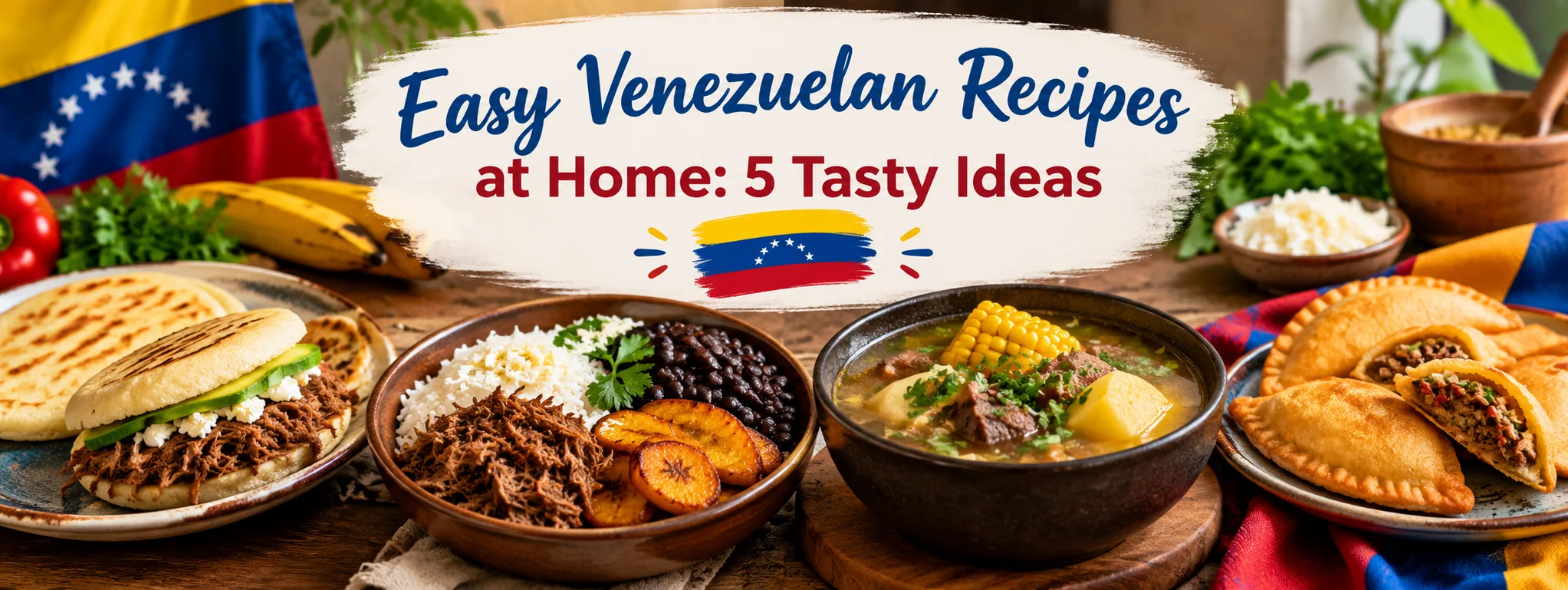
Making easy Venezuelan recipes at home is a wonderful way to explore the flavors of Venezuelan cuisine without needing complicated techniques or hard-to-find ingredients. From crispy corn cakes called arepas to sweet fried plantains and comforting black beans, Venezuelan food combines simple ingredients with satisfying textures and rich flavors.
Many popular Venezuelan dishes use cornmeal, beans, rice, cheese, eggs, beef, chicken, and fresh vegetables. These ingredients are versatile, affordable, and available in many American grocery stores. Whether you want a quick breakfast, a filling lunch, or a family-friendly dinner, there are plenty of dishes you can prepare in your own kitchen.
In this guide, you will learn how to make three approachable Venezuelan favorites: traditional arepas, sweet fried plantains, and Venezuelan-style black beans. You will also discover useful ingredient substitutions, serving suggestions, cooking tips, and storage instructions to help you enjoy these dishes with confidence.
What Makes Venezuelan Recipes Special?
Venezuelan cuisine reflects a combination of Indigenous, African, and European culinary influences. Corn, beans, plantains, rice, meat, and cheese feature prominently in many traditional meals, although ingredients and preparation methods vary by region and family.
One of the most recognizable foods is the arepa, a round corn cake that can be grilled, baked, or cooked on a skillet. Once cooked, it can be sliced open and filled with cheese, shredded chicken, beef, beans, or avocado.
Plantains are another popular ingredient. Unlike regular bananas, plantains are commonly cooked before eating. Ripe plantains become soft, sweet, and caramelized when fried, making them a delicious side dish.
Black beans provide a savory contrast to corn cakes and sweet plantains. Seasoned with onion, garlic, cumin, and other everyday ingredients, they can become a hearty accompaniment or a filling for arepas.
These dishes are particularly useful for home cooks because you can prepare them separately, combine them into a complete meal, and adjust the seasonings to suit your family’s preferences.
Ingredients for Easy Venezuelan Recipes at Home
The following recipes make approximately four servings each, although serving sizes depend on how the dishes are combined.
Ingredients for Traditional Venezuelan Arepas
-
2 cups precooked white or yellow cornmeal labeled for arepas, such as masarepa
-
2½ cups warm water
-
1 teaspoon salt
-
1 tablespoon neutral cooking oil, plus extra for the skillet
-
1 cup shredded mozzarella or a mild white cheese, optional for serving
Ingredient note: Use precooked cornmeal made specifically for arepas rather than regular cornmeal or masa harina. These products have different textures and may require different preparation methods.
Ingredients for Sweet Fried Plantains
-
2 large ripe plantains with mostly yellow skins and plenty of dark spots
-
2–3 tablespoons vegetable or canola oil
-
A small pinch of salt, optional
Ripe plantains provide the characteristic sweetness and tender texture. Green plantains are less sweet and are better suited to savory preparations such as tostones.
Ingredients for Venezuelan-Style Black Beans
-
2 cans black beans, approximately 15 ounces each, drained and rinsed
-
1 tablespoon olive oil
-
1 medium yellow onion, finely chopped
-
2 garlic cloves, minced
-
½ red bell pepper, finely chopped
-
½ teaspoon ground cumin
-
½ teaspoon dried oregano
-
½–1 cup water or low-sodium vegetable broth
-
Salt and black pepper, to taste
-
1 tablespoon chopped fresh cilantro, optional
Canned beans make this version convenient for busy evenings. If you prefer dried beans, cook them separately until tender before adding the seasoning mixture.
Kitchen Equipment You Need
You only need a few basic kitchen tools to prepare these Venezuelan dishes.
-
A large mixing bowl for the arepa dough
-
A nonstick or heavy-bottomed skillet
-
A spatula or pair of kitchen tongs
-
A medium saucepan for the black beans
-
A sharp knife and cutting board
-
Measuring cups and spoons
A baking sheet is optional if you want to finish the arepas in the oven. You do not need specialized restaurant equipment to achieve satisfying results.
How to Make Easy Venezuelan Recipes at Home
These three recipes can be prepared independently or served together as a complete Venezuelan-inspired meal.
1. Make Traditional Venezuelan Arepas
Step 1: Prepare the dough.
Pour the warm water into a large bowl and dissolve the salt in it. Gradually add the precooked cornmeal while mixing with your hand or a sturdy spoon.
Add the oil and continue mixing until the ingredients form a soft dough. Let it rest for about five minutes so the cornmeal can absorb the water.
Step 2: Shape the arepas.
Divide the dough into eight equal portions. Roll each portion into a ball, then flatten it into a round disc approximately ½ inch thick.
Smooth the edges with damp fingers. If the dough cracks badly, mix in a little water. If it feels excessively sticky, add a small amount of cornmeal.
Step 3: Cook in a skillet.
Lightly grease a skillet and heat it over medium heat. Place the arepas in the skillet, leaving enough room to turn them comfortably.
Cook for approximately 5–7 minutes per side, until both sides develop a golden crust.
Step 4: Finish cooking the centers.
For thicker arepas, transfer them to an oven preheated to 350°F (175°C) and bake for another 10–15 minutes, or until the centers are cooked through.
Alternatively, continue cooking them over medium-low heat in a covered skillet, turning as needed. Cooking time depends on thickness and equipment.
Step 5: Fill and serve.
Allow the arepas to cool slightly before slicing each one horizontally to create a pocket. Fill with shredded cheese, cooked chicken, seasoned beef, avocado, or black beans.
For a simple vegetarian option, combine cheese and black beans for a hearty filling.
2. Prepare Sweet Fried Plantains
Step 1: Peel the plantains.
Cut off both ends of each plantain. Make a shallow cut along the skin and peel it away. Slice the plantains diagonally into pieces about ½ inch thick.
Step 2: Heat the oil.
Add the oil to a skillet and heat it over medium heat. The oil should be hot enough to gently sizzle when a plantain slice touches the pan, but it should not smoke.
Step 3: Fry until golden.
Arrange the slices in a single layer without overcrowding the skillet. Cook for approximately 2–4 minutes per side, adjusting the heat as necessary.
The slices should become golden brown with caramelized edges and a soft interior. Very ripe plantains may brown more quickly because of their natural sugars.
Step 4: Drain and serve.
Transfer the cooked plantains to a paper towel-lined plate. Add a small pinch of salt if desired and serve warm.
Avoid pressing the slices flat unless you are intentionally preparing a different plantain dish. For this recipe, the goal is to preserve the soft, sweet texture.
3. Cook Venezuelan-Style Black Beans
Step 1: Prepare the seasoning vegetables.
Heat the olive oil in a saucepan over medium heat. Add the chopped onion and red bell pepper.
Cook for about 4–5 minutes, stirring occasionally, until the vegetables soften. Add the garlic, cumin, and oregano, then cook for another 30–60 seconds.
Step 2: Add the beans.
Stir in the rinsed black beans and ½ cup of water or vegetable broth. Mix thoroughly so the beans are coated with the seasonings.
Bring the mixture to a gentle simmer.
Step 3: Simmer until flavorful.
Reduce the heat to medium-low and cook uncovered for approximately 10–15 minutes. Stir occasionally to prevent sticking.
If the beans become too dry, add more water or broth a little at a time. For a thicker consistency, mash a small portion of the beans against the side of the saucepan.
Step 4: Adjust the seasoning.
Taste the beans and add salt and black pepper as needed. Stir in fresh cilantro if desired.
Continue simmering briefly if you want a thicker sauce. Serve the beans warm alongside arepas and plantains, or use them as a filling.
Preparation Time, Cooking Time, and Servings
The following estimates cover each recipe individually. The total time for the three dishes together will depend on how efficiently you prepare them.
| Recipe Detail | Information |
|---|---|
| Prep Time | 10–15 minutes per recipe |
| Cook Time | Arepas: 20–30 minutes; plantains: 10–15 minutes; beans: 20–25 minutes |
| Total Time | Approximately 30–45 minutes per recipe |
| Servings | 4 servings per recipe |
| Cuisine | Venezuelan-inspired |
| Cooking Method | Skillet cooking, baking, and stovetop simmering |
The combined meal can usually be prepared in approximately 40–50 minutes if you cook the beans while preparing the arepa dough and fry the plantains during the final stages.
Tips for the Best Results
-
Use the correct cornmeal: Precooked arepa flour helps create dough that holds its shape and cooks with a tender interior.
-
Let the dough rest: A short resting period improves hydration and makes the arepas easier to shape without cracking.
-
Choose ripe plantains: Yellow skins with numerous dark spots usually indicate a sweeter fruit that caramelizes well during frying.
-
Control the heat: Medium or medium-low heat helps arepas cook through without burning the outside, while plantains need enough heat to brown without scorching.
-
Season gradually: Taste the black beans before adding extra salt, especially if you use canned beans or salted broth.
Variations and Ingredient Substitutions
One advantage of cooking Venezuelan food at home is that you can adapt the recipes to suit your ingredients and dietary preferences.
Cheese and Vegetarian Arepas
For a simple vegetarian meal, fill arepas with shredded mozzarella, Monterey Jack, or another mild melting cheese. You can also add sliced avocado, black beans, or sautéed vegetables.
For a more traditional Venezuelan flavor, look for a mild white Venezuelan-style cheese at a Latin American grocery store. The taste and melting properties will differ depending on the cheese.
Chicken or Beef Arepas
Cooked shredded chicken is a convenient filling for arepas. Season it with garlic, onion, cumin, and a little broth to keep the meat moist.
Shredded beef is another option. Cook it until tender, then season and shred it before filling the corn cakes. Keep meat refrigerated until needed, and reheat it thoroughly before serving.
Different Beans and Seasonings
Black beans are a practical choice for this recipe, but you can use another cooked bean if necessary. Keep in mind that the flavor and texture will change.
For additional depth, sauté a little extra bell pepper or add a small amount of smoked paprika. These are optional adaptations rather than requirements for traditional Venezuelan black beans.
Baked Plantains
If you prefer to use less oil, arrange plantain slices on a lightly greased baking sheet. Bake at 400°F (205°C) for approximately 15–25 minutes, turning halfway through.
The result may be less crisp and caramelized than pan-fried plantains, but it offers a convenient alternative. Check the slices frequently because ripe plantains can brown quickly.
What to Serve with Venezuelan Recipes
Arepas, black beans, and sweet plantains work especially well together because their flavors balance one another. The corn cakes are mild, the beans are savory, and the plantains add natural sweetness.
Consider these serving ideas:
-
Avocado: Add sliced or mashed avocado to arepas for a creamy texture.
-
Fresh salad: Serve a simple tomato, cucumber, and lettuce salad with lime juice.
-
Shredded cheese: Offer cheese on the side so everyone can customize their arepas.
-
Eggs: Serve fried or scrambled eggs with arepas for a filling breakfast.
-
Fresh drinks: Pair the meal with limeade, passion fruit juice, or a chilled nonalcoholic beverage.
For a casual family dinner, place the fillings and accompaniments on the table and let everyone assemble their own arepas. This makes the meal interactive and allows people to choose their preferred combinations.
How to Store and Reheat Leftovers
Store leftover arepas, plantains, and black beans separately for better texture and easier reheating.
Refrigeration: Place cooked food in shallow, airtight containers and refrigerate within two hours of cooking. Keep the refrigerator at 40°F (4°C) or below. Most cooked leftovers should be used within three to four days.
Freezing: Fully cooked, cooled arepas can be frozen in a sealed freezer-safe bag with parchment between them to prevent sticking. For the best quality, use within about two to three months. Black beans can also be frozen in airtight containers, leaving a little room for expansion.
Fried plantains can be frozen, although they may become softer after thawing.
Reheating arepas: Warm them in a skillet over medium-low heat until heated through. An oven or air fryer can also help restore some of the outer crispness.
Reheating beans: Heat the beans in a saucepan over medium heat, stirring occasionally. Add a splash of water if the sauce has thickened. Reheat leftovers to 165°F (74°C).
Reheating plantains: Warm them in a skillet or air fryer until hot. Avoid overheating, which can dry out the fruit or burn its sugary edges.
Discard leftovers that have been left at room temperature for more than two hours, or more than one hour when temperatures exceed 90°F (32°C).
Frequently Asked Questions
1. What Are the Easiest Venezuelan Recipes for Beginners?
Arepas, fried ripe plantains, and seasoned black beans are excellent starting points. They use familiar ingredients, require basic kitchen equipment, and can be prepared without advanced cooking skills. You can make each dish separately or serve them together as a complete meal.
2. Can I Make Venezuelan Arepas Without Special Equipment?
Yes. A regular mixing bowl and nonstick skillet are sufficient. You do not need an arepa press or specialized griddle. Use precooked cornmeal intended for arepas, shape the dough by hand, and cook the discs in a lightly greased skillet.
3. Are Venezuelan Recipes Usually Spicy?
Many popular Venezuelan dishes are flavorful without being particularly spicy. Garlic, onion, cumin, herbs, and other seasonings contribute flavor. If you enjoy heat, you can add fresh chili or hot sauce to your own serving without changing the entire dish.
4. Can I Prepare These Venezuelan Dishes Ahead of Time?
Yes. You can prepare the black beans a day in advance and refrigerate them. Arepa dough is best used shortly after mixing, although shaped, uncooked arepas can be refrigerated briefly in a covered container. Fry plantains close to serving time for the best texture.
5. What Can I Use Instead of Masarepa?
Look for precooked cornmeal labeled for making arepas, including suitable white or yellow varieties. Regular cornmeal and masa harina are not direct substitutes because their processing and hydration properties differ. If you cannot find masarepa, choose another recipe designed specifically for the cornmeal you have.
Final Thoughts
Preparing easy Venezuelan recipes at home is a practical way to enjoy a variety of comforting flavors with simple ingredients. Homemade arepas offer a versatile base for cheese, chicken, beef, avocado, or beans, while sweet fried plantains provide a delicious contrast and seasoned black beans make the meal more satisfying.
Start with these three approachable dishes, experiment with fillings and seasonings, and gradually explore more Venezuelan favorites as your confidence grows. With a little preparation and a few everyday kitchen tools, you can bring a taste of Venezuelan cooking to your own table.