
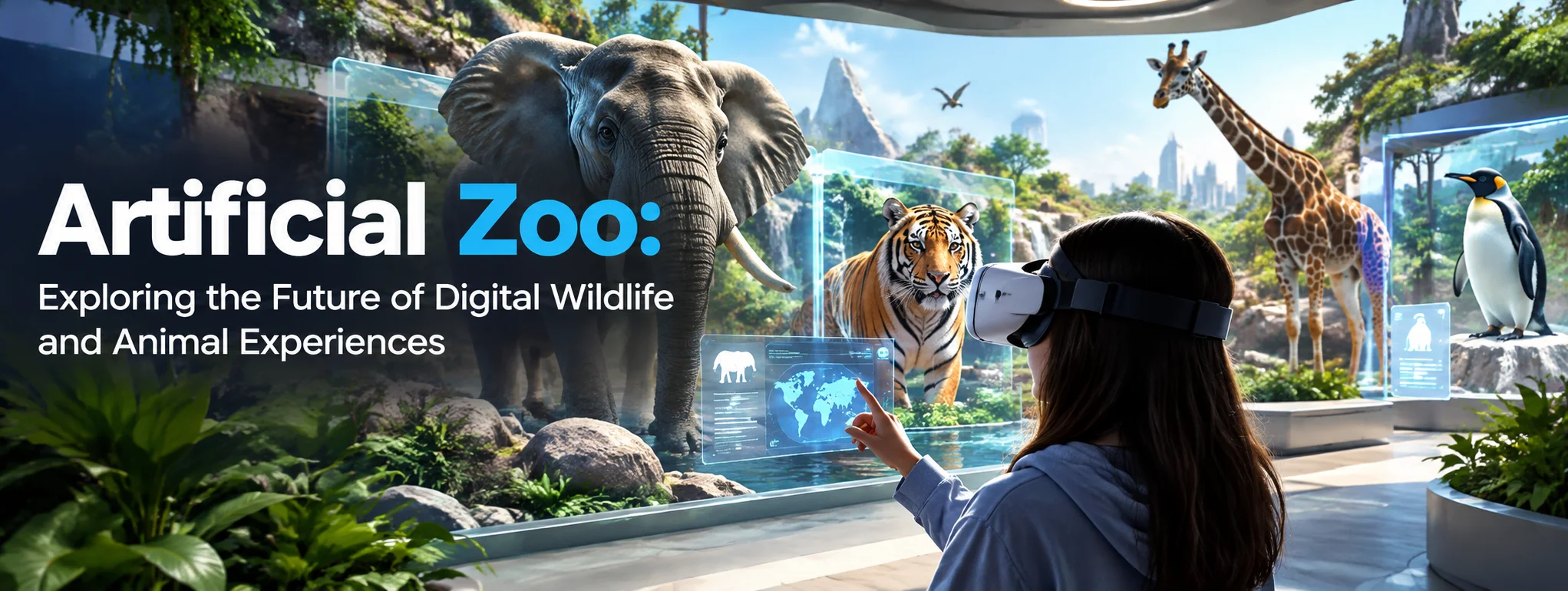
An Artificial Zoo offers an exciting way to explore wildlife through digital technology, interactive displays, virtual environments, and computer-generated animal experiences. As technology continues to transform education and entertainment, artificial zoos are creating new opportunities for people to discover the natural world without always needing to visit a traditional zoo. From realistic virtual safaris to immersive underwater adventures, these innovative experiences can bring animals and distant habitats closer to audiences of all ages.
The growing interest in digital wildlife reflects a desire for accessible, educational, and engaging ways to understand animals. Families, students, teachers, and wildlife enthusiasts can use these experiences to learn about different species, explore ecosystems, and understand the importance of conservation. Although artificial zoos cannot completely replace the experience of seeing living animals in their natural environments, they can provide valuable learning opportunities while encouraging greater awareness of the planet’s biodiversity.
What Is an Artificial Zoo?
An Artificial Zoo is a digital or technology-supported environment designed to recreate, display, or explain animal life. Instead of relying exclusively on physical enclosures and live animals, it may use virtual reality, augmented reality, artificial intelligence, interactive screens, animations, and three-dimensional simulations.
The exact meaning of an artificial zoo can vary depending on the platform or project. Some experiences are fully virtual, allowing visitors to explore digital habitats from home. Others combine physical exhibits with digital tools that make learning about wildlife more interactive.
For example, a visitor might explore a simulated rainforest, observe a digitally recreated tiger, or follow the migration of elephants across an interactive map. These activities can help people understand animal behavior, habitat requirements, and environmental challenges.
How Digital Wildlife Experiences Work
Artificial zoos use different technologies to create engaging animal experiences.
- Virtual reality (VR): Creates immersive environments where users can explore simulated forests, oceans, deserts, and other habitats.
- Augmented reality (AR): Adds digital animals and educational information to a view of the real world through compatible devices.
- Artificial intelligence (AI): Can support interactive guides, educational conversations, and simulated animal behavior.
- Three-dimensional modeling: Recreates animals, skeletons, habitats, and anatomical structures for detailed exploration.
- Interactive displays: Allow visitors to select species, examine habitats, and discover information through touchscreens or other controls.
When these technologies work together, they can transform wildlife education into an engaging experience rather than a simple collection of facts.
Artificial Zoo and the Evolution of Wildlife Education
Traditional zoos have long helped visitors learn about animals, biodiversity, and conservation. However, digital technology is expanding the ways this information can be presented. An Artificial Zoo can provide experiences that would be difficult, expensive, or unsafe to recreate in a conventional exhibition.
Imagine standing beside a digitally simulated blue whale, exploring the structure of its body, and then following its journey across the ocean. A similar experience could take visitors inside a beehive to examine how bees communicate and organize their colonies.
These activities make complex subjects easier to understand because visitors can see processes that are normally hidden from view.
Learning Through Exploration
Interactive learning encourages curiosity. Rather than simply reading about an animal, visitors can explore its environment, examine its physical characteristics, and discover how it responds to different conditions.
For students, this approach can support lessons in biology, geography, ecology, and environmental science. Teachers can use digital animal experiences to introduce unfamiliar ecosystems or explain the relationships between predators, prey, plants, and climate.
Digital exhibits can also adapt to different learning levels. Younger children might enjoy simple animations and guided activities, while older students can investigate food webs, population changes, and conservation strategies.
Key Features of a Modern Artificial Zoo
A successful Artificial Zoo should offer more than attractive graphics. Its main purpose should be to combine engaging experiences with reliable information and meaningful learning.
1. Realistic Digital Habitats
Digital habitats recreate environments such as tropical rainforests, African savannas, coral reefs, polar regions, and mountain ecosystems. Visitors can move between locations and observe how animals interact with their surroundings.
A well-designed habitat also explains the importance of temperature, water, vegetation, shelter, and food availability. This helps visitors understand why different species depend on specific environmental conditions.
2. Interactive Animal Experiences
Interactive features allow visitors to choose animals, explore their anatomy, and learn about their daily activities. Some simulations may demonstrate how birds fly, how fish navigate underwater, or how mammals communicate.
These experiences can make wildlife education more memorable, particularly for children who learn effectively through visual and hands-on activities.
3. Personalized Learning
Artificial intelligence can help digital wildlife platforms respond to visitors’ interests. Someone interested in marine biology might receive more information about dolphins, coral reefs, and ocean ecosystems, while another visitor might explore birds, reptiles, or endangered mammals.
However, educational platforms should clearly distinguish verified scientific information from fictional dialogue or simulated behavior.
4. Conservation Awareness
An artificial zoo can show how habitat destruction, pollution, climate change, and illegal wildlife trade affect animals. Interactive scenarios may allow visitors to compare different environmental decisions and observe their potential consequences.
Such activities can inspire people to make more responsible choices in their daily lives and support legitimate conservation efforts.
Benefits of Exploring an Artificial Zoo
Digital wildlife environments can provide several practical benefits for visitors, educators, and conservation organizations.
Greater Accessibility
Not everyone can travel to a zoo, wildlife sanctuary, or national park. Digital experiences can make animal education available to people who face geographical, financial, mobility, or other accessibility barriers.
Visitors may be able to explore wildlife using a computer, tablet, smartphone, or compatible headset, depending on the platform.
Safer Wildlife Learning
Some animals are difficult to observe safely in the wild, while others live in remote or inaccessible environments. Digital simulations allow visitors to examine these species without entering dangerous habitats or disturbing wildlife.
For example, a virtual experience can introduce visitors to deep-sea creatures or demonstrate how a crocodile hunts without exposing anyone to physical danger.
Flexible Educational Opportunities
Schools and educational organizations can use artificial zoos to supplement classroom lessons. Teachers can revisit digital exhibits, organize group activities, and connect wildlife topics to broader scientific concepts.
These experiences may also be useful in museums, libraries, science centers, and environmental education programs.
Reduced Dependence on Physical Exhibits
Digital exhibits can present species that a physical facility cannot accommodate. They can also be updated to include new research, conservation information, and additional educational activities.
Nevertheless, digital displays still require electricity, computing equipment, software development, and maintenance. Their environmental impact depends on how the technology is designed, operated, and used.
Artificial Zoo vs. Traditional Zoo
Both artificial and traditional zoos can introduce people to wildlife, but they offer different experiences. Understanding these differences helps visitors decide which option best suits their needs.
| Feature | Artificial Zoo | Traditional Zoo |
|---|---|---|
| Main experience | Digital animals and simulated habitats | Physical exhibits, often featuring living animals |
| Accessibility | May be available remotely | Usually requires an in-person visit |
| Animal interaction | Simulated or screen-based | Observation of living animals; direct contact is restricted or supervised where permitted |
| Educational methods | VR, AR, animations, and interactive software | Animal observation, signage, demonstrations, and educational programs |
| Habitat exploration | Can recreate inaccessible or extinct environments | Limited to the habitats and exhibits available at the facility |
| Animal welfare considerations | No live animals are required for purely digital exhibits | Requires appropriate care, housing, enrichment, and veterinary support |
| Main limitation | Cannot fully reproduce the experience of observing living animals | Access depends on location, operating hours, facilities, and available exhibits |
An artificial zoo and a traditional zoo do not necessarily compete with one another. Digital exhibits can complement physical wildlife institutions by helping visitors prepare for a visit, understand what they observe, and continue learning afterward.
How Artificial Zoos Can Support Wildlife Conservation
Conservation is one of the most valuable applications of digital wildlife experiences. When designed responsibly, an Artificial Zoo can help people understand why species are threatened and what can be done to protect them.
Explaining Endangered Species
Digital exhibits can introduce visitors to endangered animals and explain the threats they face. For instance, an interactive activity might show how shrinking forests affect orangutans or how plastic pollution threatens marine life.
Visitors can explore the connections between human activities and wildlife survival. This makes conservation issues more understandable and encourages informed discussion.
Demonstrating Ecosystem Relationships
Animals do not exist independently of their surroundings. They rely on plants, water, soil, other animals, and stable environmental conditions.
A digital ecosystem can demonstrate what happens when one species disappears or when a habitat changes significantly. Visitors may discover how the loss of pollinators affects plant reproduction or how the decline of predators can influence the balance of an ecosystem.
These simulations can communicate scientific concepts clearly, provided that their assumptions and limitations are explained.
Encouraging Responsible Action
Learning about wildlife is most valuable when it inspires meaningful action. Artificial zoos can direct visitors toward practical conservation steps, such as reducing waste, avoiding products linked to illegal wildlife trade, supporting credible conservation organizations, and respecting animals in their natural habitats.
Digital experiences should not suggest that watching a simulation alone solves environmental problems. Instead, they should connect learning with realistic opportunities to make a difference.
Challenges and Limitations of Artificial Zoos
Although artificial zoos offer exciting possibilities, they also have limitations that developers and educators should consider.
Limited Emotional Connection With Living Animals
Watching a realistic digital elephant can be fascinating, but it is not identical to observing a living elephant. Real animals have individual behaviors, physical needs, and complex relationships that simulations may not fully capture.
For some visitors, seeing living wildlife creates a powerful emotional connection that encourages lasting interest in conservation.
Technology Costs and Access
High-quality virtual reality experiences can require expensive equipment, reliable internet access, and capable computers. These requirements may prevent some schools, families, and communities from using advanced platforms.
Developers can improve accessibility by offering simpler browser-based experiences, mobile-friendly exhibits, subtitles, audio descriptions, and options that work without specialized equipment.
Scientific Accuracy
Digital animals may look realistic while behaving inaccurately. Incorrect information can mislead visitors about feeding patterns, migration, social structures, or natural habitats.
Developers should consult wildlife experts, use credible scientific sources, and clearly label fictional or speculative elements.
Screen Time and Privacy
Some artificial zoo experiences involve extended screen use, online accounts, or data collection. Educational providers should protect children’s privacy, collect only necessary information, and offer comfortable sessions with appropriate breaks.
A well-designed experience should prioritize learning and accessibility instead of using excessive notifications or unnecessary personal-data collection.
The Future of Artificial Zoo Experiences
The future of the Artificial Zoo will likely involve more immersive, personalized, and interactive technologies. As software and digital displays improve, visitors may be able to explore highly detailed ecosystems and investigate animal behavior from multiple perspectives.
More Immersive Virtual Safaris
Future virtual safaris could allow visitors to travel through simulated wildlife reserves, observe seasonal changes, and learn how different species share resources. More advanced environments may combine realistic sound, spatial movement, and interactive storytelling.
These experiences could be especially valuable for schools that cannot organize expensive field trips.
AI-Powered Wildlife Guides
Artificial intelligence may provide conversational guides that answer questions about animal anatomy, habitats, diets, and conservation status. A visitor could ask why a polar bear depends on sea ice or how a hummingbird obtains energy from nectar.
For this technology to be trustworthy, responses should rely on credible sources and make uncertainty clear rather than presenting every answer as fact.
Digital Twins and Scientific Research
A digital twin is a virtual representation of a real-world system. In wildlife applications, digital models may help researchers visualize habitats, examine ecological data, or explore possible conservation scenarios.
These scientific tools are different from entertainment-focused artificial zoos, but some of their methods may eventually support public education. Any predictions should be interpreted carefully because ecological systems are complex and constantly changing.
How to Choose a Quality Artificial Zoo Experience
If you want to explore a digital wildlife platform, consider the following five points before choosing one.
- Check scientific accuracy: Look for information supported by wildlife experts, conservation organizations, museums, or educational institutions.
- Explore the available species: Choose a platform that covers animals or ecosystems relevant to your interests.
- Review accessibility: Consider device requirements, internet needs, subtitles, audio support, and ease of navigation.
- Evaluate educational value: Look for meaningful explanations, interactive activities, and opportunities to test your knowledge.
- Consider privacy and cost: Review pricing, account requirements, data policies, and any additional equipment needed.
The best experience is not necessarily the one with the most impressive graphics. A useful platform should make wildlife easier to understand while encouraging curiosity, critical thinking, and respect for nature.
Frequently Asked Questions
1. Is an Artificial Zoo a real zoo?
An Artificial Zoo is generally a digital or technology-supported wildlife experience. It may operate independently online or complement a physical zoo, museum, or educational facility.
2. Can an Artificial Zoo replace a traditional zoo?
Not completely. It can provide accessible education and realistic simulations, but it cannot fully reproduce observing living animals or the practical responsibilities involved in their care.
3. What technology is used in an Artificial Zoo?
Common technologies include virtual reality, augmented reality, artificial intelligence, 3D modeling, interactive displays, and computer simulations.
4. Are Artificial Zoos useful for children?
Yes. Age-appropriate digital wildlife experiences can help children learn about animal species, habitats, ecosystems, and conservation through interactive activities.
5. Can an Artificial Zoo help protect endangered animals?
It can raise awareness, explain conservation challenges, and encourage responsible actions. Its actual impact depends on the quality of its information and whether learning leads to meaningful conservation support.
Final Thoughts
An Artificial Zoo represents an exciting opportunity to combine wildlife education, digital innovation, and environmental awareness. Through virtual habitats, interactive animal models, immersive safaris, and AI-supported learning, these experiences can help people explore the natural world in new and accessible ways.
Their greatest strength lies in making complex wildlife topics easier to understand. Students can investigate ecosystems, families can discover unfamiliar species, and conservation educators can explain environmental challenges through engaging digital experiences.
1 thought on “Artificial Zoo: Exploring the Future of Digital Wildlife and Animal Experiences”