
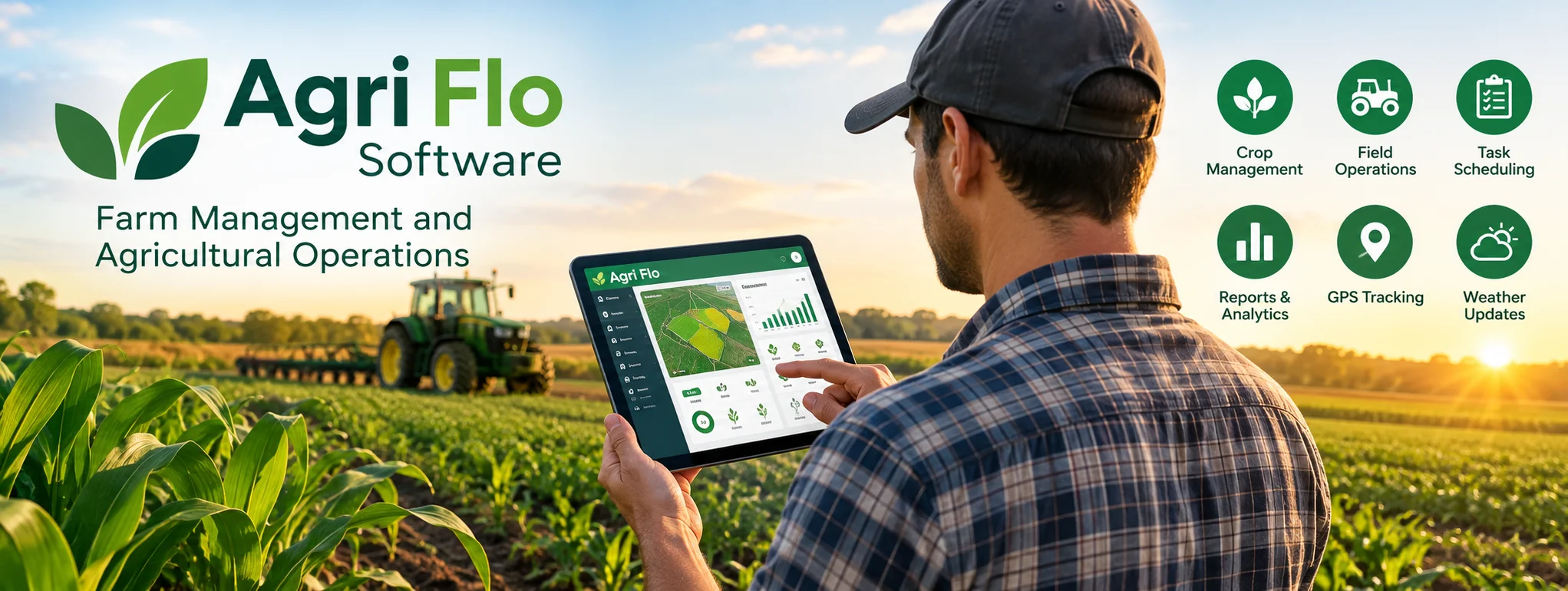
Modern farming requires more than planting seeds and waiting for harvest. Farmers must manage land, crops, equipment, labor, irrigation, expenses, and changing weather conditions to keep their operations productive. Agri Flo is a search term associated with farm management and agricultural operations, making it a useful starting point for exploring how organized farming practices and digital tools can support better decisions.
Whether a farmer manages a small family farm or a large agricultural business, effective planning can reduce waste, improve resource use, and create more reliable workflows. From preparing the soil to tracking harvested crops, every stage requires attention to detail. A well-organized system helps farmers understand what needs to happen, when it should happen, and which resources are available.
Understanding Agri Flo and Its Role in Modern Farming
Agri Flo can be explored in the context of agricultural management, where efficient planning and coordination are essential to daily farm activities. However, the name alone does not establish the features, ownership, pricing, or availability of a specific software platform. Those details should be verified through an official product source before making purchasing decisions.
The broader concept of farm management focuses on bringing essential agricultural activities into a coordinated workflow. Instead of handling every task separately, farmers can organize schedules, record expenses, monitor crop development, and evaluate operational performance.
For example, a farmer growing wheat may need to coordinate land preparation, seed purchasing, fertilizer application, irrigation, pest monitoring, and harvesting. Keeping these activities organized makes it easier to identify delays and prevent avoidable mistakes.
Why Farm Management Matters
Agricultural operations involve many connected decisions. A delay in irrigation can affect crop development, while poorly timed equipment maintenance can interrupt fieldwork during a critical period.
Effective management helps farmers:
- Plan agricultural activities according to crop requirements and seasonal conditions.
- Monitor spending on seeds, fertilizers, fuel, labor, and machinery.
- Coordinate workers and equipment across different fields.
- Maintain accurate records of planting, treatments, and harvesting.
- Identify operational problems before they create larger losses.
These practices are valuable because agricultural productivity depends on both natural conditions and the quality of operational decisions.
Key Components of Effective Agricultural Operations
Successful farm management combines several activities that work together. Each component contributes to productivity, cost control, and the long-term sustainability of agricultural land.
1. Crop Planning and Scheduling
Crop planning begins before seeds enter the ground. Farmers must consider soil conditions, seasonal temperatures, expected rainfall, seed availability, and market demand.
A practical crop schedule identifies important activities and their expected completion dates. It may include land preparation, sowing, fertilization, irrigation, crop inspections, and harvesting.
A digital planning tool can help organize these tasks in one place, provided it supports the relevant scheduling features. Farmers should also leave room for adjustments because weather conditions and crop development rarely follow an exact timetable.
2. Soil Health and Nutrient Management
Healthy soil supports root development, water retention, and nutrient availability. Regular soil testing can help farmers understand existing nutrient levels and make more informed fertilizer decisions.
Rather than applying the same fertilizer quantity everywhere, farmers can use soil test results and crop requirements to guide application rates.
Organic matter management, suitable crop rotation, erosion control, and responsible fertilizer use can also support soil health over time.
3. Irrigation and Water Management
Water management is particularly important in areas where rainfall is limited or unpredictable. Overwatering may waste resources and damage crops, while insufficient irrigation can restrict plant growth.
Farmers should consider soil moisture, crop growth stages, local weather, and irrigation system efficiency when planning water applications.
Where available, moisture sensors and irrigation monitoring systems can provide additional information. These tools are most useful when their readings are combined with practical field observations.
4. Equipment and Machinery Management
Tractors, harvesters, pumps, and other agricultural machines represent significant operating costs. Equipment breakdowns can delay important activities and increase labor expenses.
A maintenance schedule should include routine inspections, lubrication, cleaning, filter replacement, and servicing according to manufacturer recommendations.
Farm managers can also record fuel consumption, machine operating hours, repair costs, and equipment availability. These records help identify recurring problems and support more informed replacement decisions.
5. Labor and Field Operations
Agricultural work often requires several people to complete different activities within a limited period. Without clear instructions, workers may duplicate tasks or overlook important responsibilities.
A daily work plan should identify the task, assigned worker, field location, required equipment, and expected completion time.
Recording completed work also creates a useful history for future planning. During harvest, for instance, these records can help managers understand which fields require additional labor or equipment.
How Digital Tools Can Improve Farm Management
Digital agriculture tools can help organize information that would otherwise remain scattered across notebooks, spreadsheets, receipts, and individual devices.
Depending on their actual capabilities, farm management systems may support recordkeeping, scheduling, inventory tracking, field monitoring, and operational reporting. Some platforms also integrate mapping, weather information, machinery data, or financial records.
The following table summarizes common agricultural management activities and the ways organized systems can support them.
| Farm management area | Information to record | Potential benefit |
|---|---|---|
| Crop planning | Crop type, planting date, field location | Better seasonal coordination |
| Irrigation | Water applications, dates, field conditions | More informed water management |
| Inventory | Seeds, fertilizers, chemicals, spare parts | Fewer unexpected shortages |
| Equipment | Maintenance dates, fuel, repair expenses | Improved maintenance planning |
| Labor | Assigned tasks, hours, completed work | Clearer workforce coordination |
| Finances | Input costs, wages, fuel, sales | Better cost visibility |
| Harvesting | Harvest dates, quantities, crop quality | More useful production records |
These benefits depend on the accuracy of the information entered and the features available in the chosen system. Software cannot compensate for missing records or unreliable field observations.
Keeping Agricultural Records Accurate
Good records are among the most valuable tools available to a farm manager. Each entry should include enough detail to explain what happened, where it happened, and when it occurred.
For example, a fertilizer record should identify the field, product, application date, quantity, and relevant application notes. Recording only the total fertilizer purchased provides much less information about actual field use.
Farmers should establish consistent units, naming conventions, and recording procedures. A simple system that workers use correctly is often more useful than a sophisticated platform with incomplete data.
Practical Benefits of Organized Farm Operations
Well-managed agricultural operations can improve visibility across the farm and help farmers make decisions based on documented experience rather than memory alone.
Better Cost Control
Farm expenses can accumulate through fuel, labor, equipment repairs, seed purchases, fertilizer, irrigation, and transportation.
Recording expenses by crop or field helps farmers understand where money is being spent. It can also reveal unexpected cost increases that deserve investigation.
For example, if irrigation expenses rise substantially during one growing season, the records may encourage a review of pump efficiency, water requirements, or maintenance needs.
Improved Resource Utilization
Seeds, water, fertilizers, labor, and machinery should be used according to actual agricultural requirements.
Planning helps reduce unnecessary movement between fields, avoid duplicate purchases, and coordinate equipment use. These improvements may also reduce waste and support more responsible resource management.
More Informed Decisions
Historical records can help farmers compare seasons, evaluate different crop varieties, and understand how operational changes affect results.
However, comparisons must account for differences in weather, soil, planting dates, and market conditions. A higher yield in one season does not automatically prove that a particular management change caused the improvement.
Stronger Seasonal Preparation
Preparing for the next growing season becomes easier when farmers know which supplies remain available, which machines need servicing, and which activities caused delays during the previous season.
A structured review can turn everyday farm experience into practical lessons for future operations.
How to Choose a Farm Management Solution
Before adopting Agri Flo or another agricultural management platform, farmers should establish what they need the system to accomplish. Choosing software based only on its name or appearance may lead to unnecessary expenses or missing capabilities.
Identify Your Main Requirements
Start with the most time-consuming or difficult parts of the current operation. A small farm may need simple expense tracking and crop schedules, while a larger business may require multi-field coordination, inventory controls, and detailed reporting.
Write down the essential requirements before comparing available platforms.
Check Mobile and Offline Access
Farmers may need to enter information while working in fields where internet access is unreliable. Mobile compatibility and offline functionality can therefore be important.
Verify whether information can be recorded without an internet connection and how it synchronizes later. Do not assume these capabilities are included without checking the product documentation.
Evaluate Data Security and Ownership
Agricultural records can contain commercially important information about land, crop performance, expenses, and production.
Review the provider’s privacy policy, account security measures, backup options, export functionality, and data ownership terms. The ability to export records is particularly valuable if a farm later changes software providers.
Compare Costs With Practical Value
A subscription is worthwhile only when its benefits justify the expense. Consider setup charges, recurring fees, training requirements, additional users, and any paid integrations.
Farmers should compare the total cost with realistic operational improvements rather than relying on broad marketing promises.
Challenges in Implementing Digital Farm Management
Digital tools can improve organization, but their effectiveness depends on how well they fit everyday agricultural work.
One common challenge is inconsistent data entry. If workers record tasks differently or forget to update completed activities, reports may become unreliable.
Another challenge is the learning curve. Farmers and workers may need training before a new system becomes part of their daily routine.
Connectivity, device availability, language support, and subscription costs can also influence adoption.
A practical implementation process includes the following steps:
- Begin with one important workflow, such as crop scheduling or expense tracking.
- Assign responsibility for maintaining records and checking their accuracy.
- Train workers using realistic examples from the farm.
- Review the system regularly and remove unnecessary steps.
- Expand its use only after the initial workflow becomes reliable.
This gradual approach reduces disruption and gives farm managers time to determine whether the tool genuinely improves their work.
The Future of Agricultural Operations
Agriculture is increasingly combining traditional farming knowledge with data-driven techniques. GPS-guided machinery, remote sensing, soil moisture monitoring, automated irrigation, and digital recordkeeping can help farmers manage operations with greater precision.
Artificial intelligence may also support tasks such as analyzing field images, identifying potential crop stress, and interpreting large amounts of operational data. However, these systems require appropriate information and should not replace expert judgment when important crop or financial decisions are involved.
The most useful agricultural technology is not necessarily the most advanced. It is the technology that addresses a real problem, works reliably under local conditions, and provides information that farmers can use.
For Agri Flo-related research, an important consideration is distinguishing between general agricultural management practices and verified features of a particular product. Confirming the provider, supported functions, pricing, and availability would make a product-specific evaluation more valuable.
Frequently Asked Questions
1. What is Agri Flo used for?
Agri Flo is a search term associated here with farm management and agricultural operations. Its exact product identity and intended functions require verification through an official source.
2. Can farm management software help reduce costs?
It can help farmers track expenses, identify waste, and plan resources more effectively. Actual savings depend on the farm’s needs and how the system is used.
3. Which farm activities should be tracked first?
Crop scheduling, input inventory, operating expenses, irrigation, and equipment maintenance are useful starting points.
4. Is digital farm management suitable for small farms?
Yes. Small farms can benefit from basic digital records and schedules, although a notebook or spreadsheet may be sufficient for simpler operations.
5. What should farmers check before choosing software?
Farmers should review essential features, pricing, mobile access, offline support, data security, export options, and compatibility with their existing workflows.
Final Thoughts
Agri Flo provides a starting point for exploring the broader role of organized farm management and agricultural operations. Effective farming depends on coordinating crop planning, soil health, irrigation, equipment, labor, inventory, and finances while adapting to changing field conditions.
Digital management tools can make these activities easier to monitor, but their value depends on accurate records, practical workflows, and suitability for the farm. Farmers should begin by identifying their most important operational challenges and evaluating solutions against those needs.
The strongest approach combines reliable agricultural knowledge with disciplined planning and thoughtful use of technology. By tracking essential activities, reviewing results, and learning from each growing season, farmers can make more informed decisions and build more efficient, resilient operations.
1 thought on “Agri Flo Software :Farm Management and Agricultural Operations”