
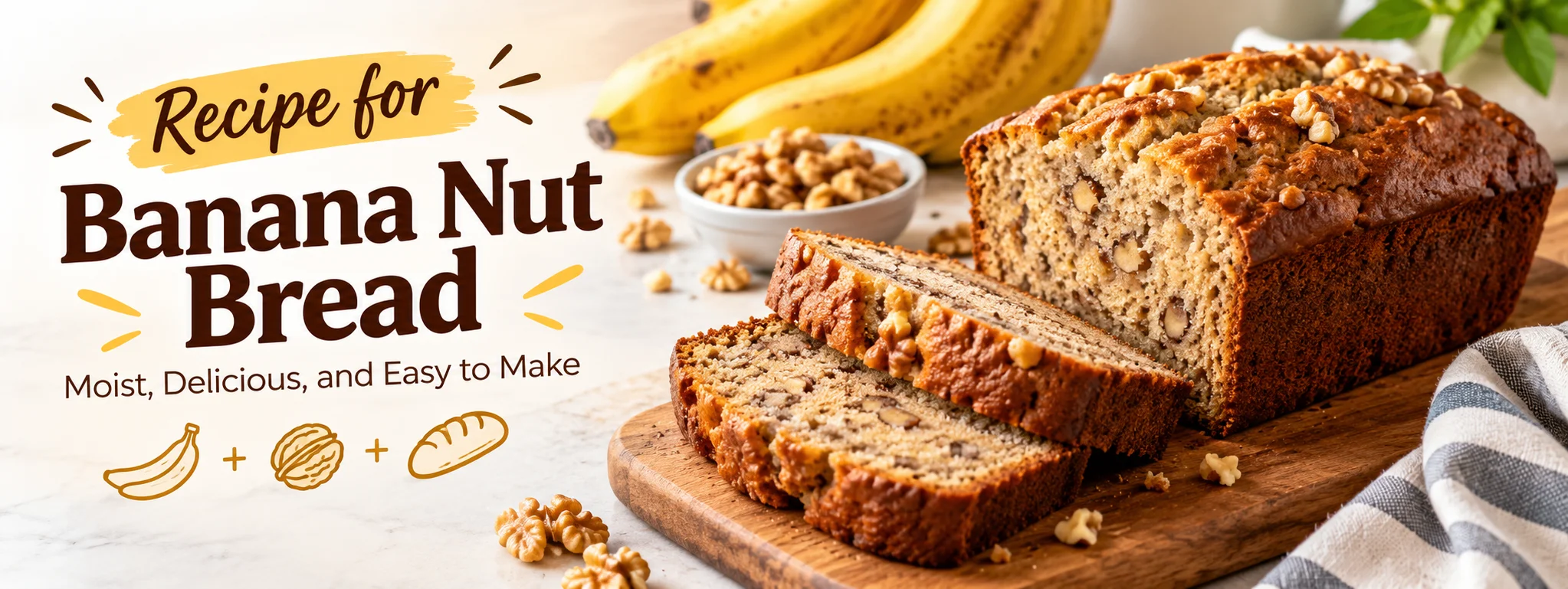
If you are looking for a homemade treat that is soft, flavorful, and wonderfully satisfying, this Recipe for Banana Nut Bread is an excellent choice. Made with ripe bananas, crunchy nuts, simple pantry ingredients, and a touch of vanilla, this classic baked favorite brings comforting flavors to your kitchen. It is perfect for breakfast, an afternoon snack, or a sweet addition to your weekend brunch.
The best part is that banana nut bread is easy to prepare, even if you are new to baking. You do not need expensive equipment or complicated techniques to create a moist loaf with a golden crust and a tender center. With the right ingredients and a few helpful tips, you can bake delicious banana nut bread that your family and friends will love.
Why You Will Love This Recipe for Banana Nut Bread
Banana nut bread is a timeless homemade favorite because it combines natural sweetness with a rich, nutty flavor. Overripe bananas provide moisture and sweetness, while chopped walnuts or pecans add a pleasant crunch to every slice.
Here are five reasons to try this recipe:
- Easy preparation: Mix the ingredients using basic kitchen tools without complicated baking techniques.
- Moist texture: Ripe bananas and the right amount of butter help create a soft, tender crumb.
- Rich flavor: Vanilla, cinnamon, and toasted nuts give the loaf a delicious aroma.
- Budget-friendly ingredients: Most ingredients are common pantry staples.
- Versatile serving options: Enjoy a slice plain, toasted, or topped with butter, honey, or cream cheese.
Whether you are using leftover bananas or preparing a homemade breakfast, this recipe offers a practical and delicious solution.
Ingredients for Banana Nut Bread
The secret to excellent banana nut bread begins with choosing the right ingredients. Each ingredient contributes to the loaf’s texture, flavor, and structure.
Complete Ingredient List
| Ingredient | Amount | Purpose |
|---|---|---|
| Ripe bananas, mashed | 3 medium | Add moisture and natural sweetness |
| All-purpose flour | 2 cups | Provides structure |
| Granulated sugar | 3/4 cup | Sweetens the bread |
| Unsalted butter, melted | 1/2 cup | Adds richness and tenderness |
| Large eggs | 2 | Bind the ingredients |
| Chopped walnuts or pecans | 3/4 cup | Provide nutty flavor and crunch |
| Baking soda | 1 teaspoon | Helps the bread rise |
| Salt | 1/4 teaspoon | Balances the sweetness |
| Vanilla extract | 1 teaspoon | Enhances the flavor |
| Ground cinnamon | 1/2 teaspoon | Adds warm, aromatic notes |
| Milk | 2 tablespoons, if needed | Helps adjust the batter consistency |
For the best results, use bananas with brown spots on their peels. These bananas are generally sweeter and easier to mash than firm, greenish-yellow bananas.
Walnuts are a traditional choice, but pecans also work beautifully. If you prefer a stronger toasted flavor, lightly toast the nuts in a dry skillet before adding them to the batter. Let them cool before mixing.
How to Make This Recipe for Banana Nut Bread
Follow these straightforward steps to prepare a flavorful homemade loaf. Allow enough time for the bread to bake completely and cool before slicing.
Step 1: Preheat the Oven
Preheat your oven to 350°F (175°C). Grease a standard 9-by-5-inch loaf pan with butter or cooking spray. You can also line the pan with parchment paper, leaving some overhang to make removing the finished loaf easier.
Preparing the pan before mixing the batter helps prevent unnecessary delays.
Step 2: Mash the Bananas
Peel three ripe bananas and place them in a large mixing bowl. Mash them with a fork until mostly smooth.
A few small banana pieces are perfectly fine and can create little pockets of flavor throughout the bread. Avoid using completely green bananas because they tend to be less sweet and more difficult to mash.
For an extra-rich banana flavor, use very ripe bananas with plenty of brown spots.
Step 3: Combine the Wet Ingredients
Add the melted butter to the mashed bananas and stir until combined. Mix in the sugar, eggs, and vanilla extract.
Whisk gently until the mixture looks relatively smooth. The melted butter should be warm rather than hot so it does not accidentally cook the eggs when combined.
If you enjoy a slightly less sweet loaf, you can reduce the sugar to 1/2 cup, although this may change the final flavor and browning.
Step 4: Mix the Dry Ingredients
In a separate bowl, combine the flour, baking soda, salt, and ground cinnamon. Stir these ingredients together to distribute the baking soda evenly.
Mixing the dry ingredients separately helps prevent concentrated pockets of baking soda in the finished bread.
For a more delicate texture, measure the flour accurately. Spoon it into your measuring cup and level the top rather than pressing the flour firmly into the cup.
Step 5: Combine the Batter
Gradually add the dry ingredients to the banana mixture. Fold everything together with a spatula until no large streaks of dry flour remain.
Avoid vigorous or prolonged mixing. Overmixing can develop excess gluten, resulting in a dense or tough loaf instead of a tender one.
If the batter seems unusually thick, add up to two tablespoons of milk. Banana size and flour measurements can affect the consistency, so add the milk gradually rather than automatically using the full amount.
Step 6: Add the Nuts
Fold the chopped walnuts or pecans into the batter. Reserve a small handful if you want to sprinkle a few nuts over the top before baking.
Distribute the nuts evenly so that each slice contains a satisfying amount of crunch. Chop them into small, bite-sized pieces to make the loaf easier to slice.
If you are baking for someone with a nut allergy, omit the nuts entirely and take appropriate precautions against cross-contact.
Step 7: Transfer the Batter to the Pan
Pour the prepared batter into the greased loaf pan. Use a spatula to spread it evenly into the corners.
If desired, sprinkle the reserved nuts over the surface. This creates an attractive golden topping with a little extra crunch.
Gently tap the pan against the countertop once or twice to release large air pockets.
Step 8: Bake Until Golden
Place the loaf pan on the center rack of the preheated oven. Bake for approximately 55–65 minutes.
Baking times vary depending on the oven, pan material, and moisture content of the bananas. Begin checking the loaf around the 50-minute mark.
Insert a toothpick into the center. It should come out clean or with a few moist crumbs, but without wet batter. For a more precise check, the center should reach approximately 200–205°F (93–96°C).
If the top becomes too dark before the center is done, loosely cover it with aluminum foil and continue baking.
Step 9: Cool Before Slicing
Remove the pan from the oven and let the bread rest for about 10–15 minutes. Carefully lift or turn the loaf out onto a wire rack.
Allow it to cool for at least another 30 minutes before slicing. Cutting into hot banana bread can cause the soft center to crumble or appear gummy.
Once cooled, use a serrated knife to cut even slices and serve.
Tips for the Best Banana Nut Bread
A few small adjustments can make a noticeable difference in your baking results.
Choose the Right Bananas
Ripe bananas are essential for a naturally sweet and moist loaf. Brown-speckled bananas usually provide a deeper flavor than barely ripe fruit. If your bananas are still firm and yellow, allow them to ripen before making the recipe.
Measure Flour Carefully
Too much flour is one of the most common reasons banana bread becomes dry. Use a kitchen scale if available, or spoon the flour into a measuring cup and level it off.
Avoid Overmixing
Once the flour is added, stir only until the ingredients come together. A slightly lumpy batter is usually better than an overworked one.
Check the Center Before Removing the Loaf
The outside may appear finished while the middle remains underbaked. Use a toothpick or food thermometer to confirm doneness instead of relying only on the crust’s color.
Let the Bread Cool Properly
Cooling allows the crumb to set and makes slicing easier. Although the tempting aroma may make you want to cut it immediately, waiting improves the final texture.
Delicious Variations to Try
One of the best things about this Recipe for Banana Nut Bread is how easily you can customize it.
Chocolate Chip Banana Nut Bread
Fold 1/2 cup of chocolate chips into the batter along with the nuts. Semi-sweet chocolate balances the bananas’ natural sweetness, while dark chocolate creates a richer flavor.
Cinnamon Banana Nut Bread
Increase the cinnamon to 1 teaspoon for a warmer, more aromatic loaf. You can also sprinkle a small amount of cinnamon sugar over the top before baking.
Whole Wheat Banana Nut Bread
Replace up to half of the all-purpose flour with whole wheat flour. This adds a heartier flavor and slightly denser texture. If the batter seems dry, add a small amount of milk as needed.
Dairy-Free Banana Nut Bread
Replace the butter with an equal amount of neutral-flavored vegetable oil or melted coconut oil. Check the labels of any additional ingredients to ensure they meet your dietary requirements.
Reduced-Sugar Banana Nut Bread
Reduce the granulated sugar to 1/2 cup and use very ripe bananas. The finished bread will have a less sweet flavor and may brown differently, but the bananas will still provide natural sweetness.
Common Banana Nut Bread Mistakes to Avoid
Even a simple recipe can produce disappointing results if a few important details are overlooked.
- Using underripe bananas: This can produce a less sweet loaf with a weaker banana flavor.
- Adding too much flour: Excess flour often makes the bread dry and heavy.
- Overmixing the batter: Too much mixing can create a tougher texture.
- Removing the bread too early: An underbaked center may collapse or remain gummy.
- Slicing while hot: The loaf may crumble before the crumb has properly set.
Paying attention to these details helps create a beautifully textured loaf with a tender center and a flavorful crust.
How to Store Banana Nut Bread
Proper storage keeps your homemade bread enjoyable for longer.
Room Temperature Storage
Once completely cool, place the loaf in an airtight container or wrap it tightly. Store it at room temperature for approximately two to three days, provided the environment is cool and dry.
Avoid sealing the bread while it is still warm because trapped steam can make the surface damp.
Refrigerator Storage
You can refrigerate banana nut bread in an airtight container for approximately one week. However, refrigeration may make it feel firmer or drier, so room-temperature storage is often preferable for short periods when conditions are suitable.
Discard the bread if you notice mold, an unusual smell, or other signs of spoilage.
Freezing Instructions
For longer storage, slice the cooled loaf and wrap individual portions securely. Place the slices in a freezer-safe bag or container and freeze for up to three months for best quality.
Individual slices are convenient because you can thaw only what you need. Let a slice thaw at room temperature or warm it gently in a toaster oven.
Serving Ideas for Banana Nut Bread
Freshly baked banana nut bread tastes delicious on its own, but a few simple additions can make it even more enjoyable.
- Serve warm slices with a little butter for a comforting breakfast.
- Add peanut butter or almond butter for a richer snack.
- Pair a slice with coffee or tea during an afternoon break.
- Spread cream cheese over a cooled slice for a creamy contrast.
- Serve toasted banana nut bread with fresh fruit for a simple brunch.
For a special presentation, arrange the slices on a serving plate and add a few chopped walnuts on the side. The combination of golden crust, soft banana center, and crunchy nuts makes this loaf appealing for everyday meals and casual gatherings.
Frequently Asked Questions
1. How ripe should bananas be for banana nut bread?
Use bananas with brown spots or mostly brown peels. They are generally sweeter, softer, and easier to mash.
2. Can I make banana nut bread without walnuts?
Yes. You can substitute pecans, use another suitable nut, or leave the nuts out completely.
3. Why is my banana nut bread dry?
Common causes include too much flour, overbaking, or overmixing. Measure ingredients carefully and check the center before removing the loaf.
4. Can I prepare the batter ahead of time?
It is best to bake the batter soon after mixing because the baking soda begins reacting with the wet ingredients. For convenience, measure the dry ingredients and prepare the nuts in advance.
5. How do I know when banana nut bread is done?
Insert a toothpick into the center. It should come out clean or with a few moist crumbs, without wet batter. A food thermometer can provide additional confirmation.
Final Thoughts
This Recipe for Banana Nut Bread is a dependable way to turn ripe bananas into a delicious homemade treat. With simple ingredients, clear instructions, and a few thoughtful baking techniques, you can create a golden loaf that is moist inside, lightly crisp outside, and filled with the satisfying crunch of walnuts or pecans.
The key to success is using ripe bananas, measuring the flour accurately, mixing the batter gently, and allowing enough time for baking and cooling. You can also experiment with chocolate chips, cinnamon, or different nuts to make the recipe your own.